
- Quick Answer
- What Is a D2C Brand Strategy?
- Why Traditional D2C Marketing Breaks as the Brand Grows
- Build the AI Operating Layer Around Brand Memory
- How the Four Agents Create a Connected D2C Growth Loop
- A Practical 90-Day D2C Ecommerce Strategy
- What AI Should Control and What Humans Should Keep
- Scale the Brand Without Scaling Operational Complexity
- Frequently Asked Questions
Lean D2C teams rarely have a shortage of tools. The real problem is that creative production, paid-media analysis, AI visibility, and Shopify execution often run in separate workflows.
That fragmentation turns growth into coordination work. Every new launch creates more briefs, dashboards, handoffs, and store updates, while headcount rarely grows at the same rate. The result is slower execution and a widening gap between what a campaign promises and what the store delivers.
A modern D2C brand strategy therefore needs fewer disconnected workflows, not simply more tools. The goal is to connect repeated execution around one source of brand context while people retain control over positioning, taste, claims, budgets, and approvals. That is where AI for D2C Brands becomes commercially useful.
Quick Answer
A modern D2C brand strategy uses shared brand knowledge and role-based ecommerce AI agents to remove recurring work. Monica creates visuals, Gavin prioritises advertising decisions, Big Head tracks AI visibility, and Richard manages Shopify experiences. People keep control of the important calls.
Bring creative production, paid performance, AI visibility, and Shopify execution into one platform built for lean ecommerce teams.Scale Your D2C Brand With a Connected AI Team
What Is a D2C Brand Strategy?
A D2C brand strategy is the operating plan used to position products, create a recognisable experience, acquire demand, and convert that demand through owned channels. It connects positioning with product storytelling, creative production, customer acquisition, store experience, retention, and measurement.
This is broader than direct to consumer marketing. Marketing brings people into the buying journey. The strategy also shapes the product page, brand consistency, response to performance, and learning after each campaign.
For a lean team, the practical question is how to increase output and improve decisions without creating more approval queues and coordination work.
Why Traditional D2C Marketing Breaks as the Brand Grows
Early-stage D2C marketing can run on founder involvement and fast conversations. That model becomes fragile as the catalogue, campaign volume, and customer base grow.
Four bottlenecks usually appear:
- Creative demand exceeds production capacity. Paid social needs frequent variations, product pages need accurate imagery, and every launch creates new formats.
- Performance reviews become reactive. Teams collect data across Meta Ads, Google Ads, and Shopify, but problems may continue spending before someone investigates them.
- Product discovery changes. Buyers now ask ChatGPT, Gemini, Claude, and Perplexity for recommendations, while many brands still measure only conventional search visibility.
- Store execution falls behind campaigns. Ads and content move quickly, but product descriptions, collection logic, landing pages, and offers wait in another queue.
That fragmentation makes ecommerce brand building harder because every channel begins telling a different version of the product story. A scalable D2C brand strategy has to reconnect those channels before customers feel the inconsistency.
Build the AI Operating Layer Around Brand Memory
Adding standalone tools rarely fixes coordination. A stronger D2C ecommerce strategy gives every system the same source of truth.
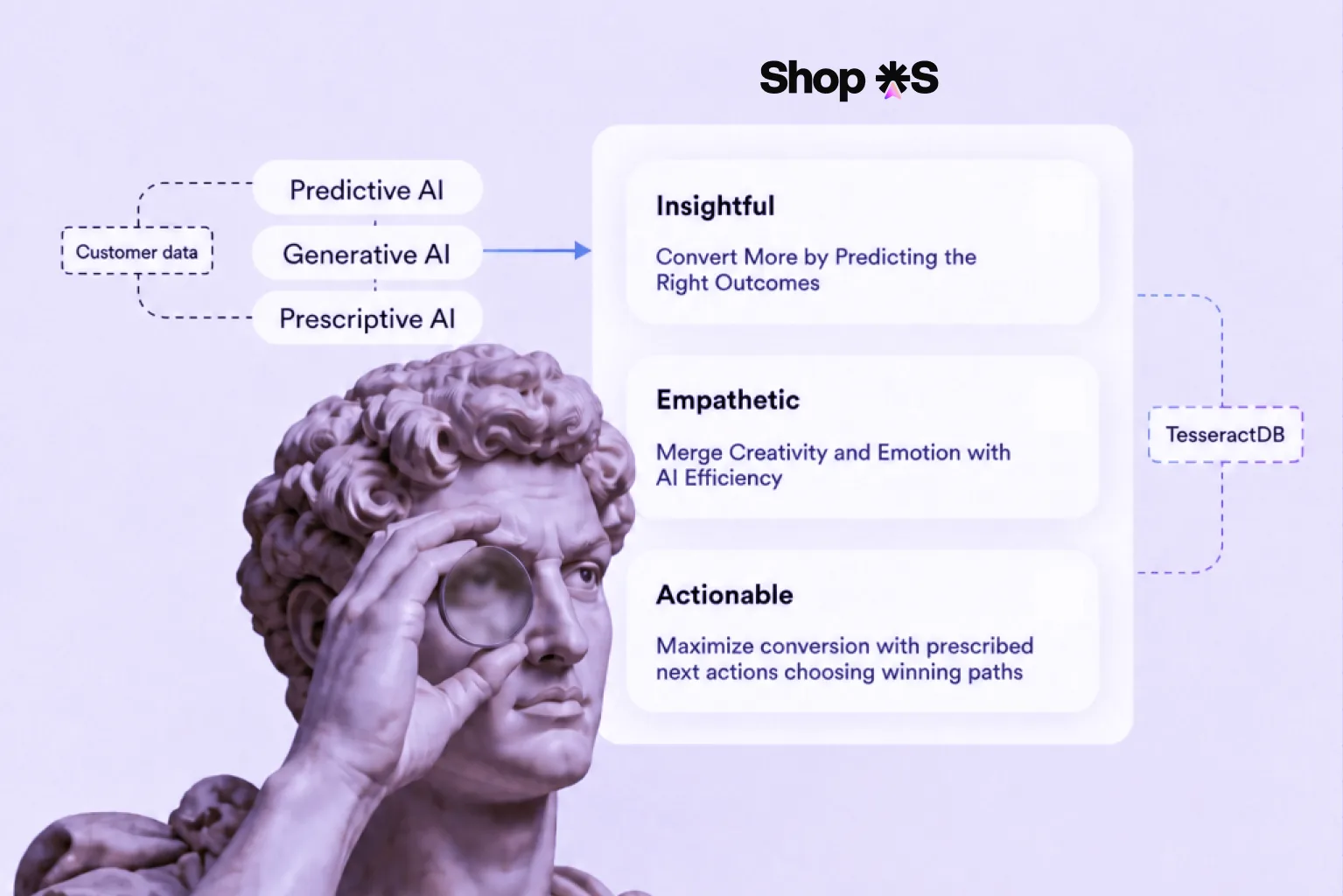
In ShopOS, Brand Memory carries positioning, voice, visual direction, product information, customer context, approved examples, and writing rules across the agent team. Read more about how AI-powered brand consistency starts with Brand Memory.
Ecommerce AI agents should work like specialised teammates who understand the same brand and contribute to the same commercial outcome. Shared context makes AI for D2C Brands useful in daily operations, not only in a demo. It also supports ecommerce brand building by keeping product truth and brand expression consistent as output increases.
See ShopOS guide to AI-powered brand management for fashion, beauty, and DTC brands.
Scale On-Brand Creative Production With Monica
Creative production is often the first constraint a lean team feels. General AI tools can create attractive scenes, but product accuracy becomes a risk if packaging, colours, proportions, patterns, or logos change.
Monica, the ShopOS AI Creative Director, turns a product, brief, reference, or rough idea into catalogue and marketing content. She supports hero shots, lifestyle images, detail views, social posts, carousels, ads, launch content, edits, and video workflows.
Two natural-language modes support different jobs:
- Supercomputer supports back-and-forth exploration and refinement.
- Creative Studio supports direct generation when the requirement is already clear.
Teams can choose the output type, model, aspect ratio, and resolution. The credit cost appears before generation. Brand Memory reduces repeated briefing, while human review protects product truth and creative taste.
The business outcome is greater creative capacity without a larger production queue. A lean team can move from product idea to channel-ready assets faster, test more variations, and keep product pages, ads, social content, and launches visually consistent. See the guide to choosing the best AI image generator for ecommerce.
Turn Advertising Data Into Decisions With Gavin
Paid-media teams have data, but often lack time to decide what deserves attention first. Manual reviews require platform switching, revenue reconciliation, catalog checks, and report building before action begins.
Gavin, the ShopOS Performance Marketing agent, gives a D2C ecommerce strategy a recurring decision layer. Meta Ads, Google Ads, and Shopify dashboards show Top Ads plus campaign, ad set, and ad-level performance.
The Catalog Dashboard separates catalog ad performance from Shopify-wide revenue. Product views, out-of-stock rules, feed management, templates, and wasted-spend reporting add the context needed for product-level decisions.
Five scheduled routines cover ROAS, fatigue, daily audits, catalog health, and SKU quadrants. Each creates a dated report with ranked actions. A marketer can also select campaigns and ask Gavin about that specific group.
The business outcome is a shorter reaction time between a performance signal and a decision. The team can identify wasted spend, creative fatigue, catalog issues, and tracking risks earlier, then focus human attention on the changes most likely to protect revenue or improve efficiency. That is what makes ecommerce AI agents useful for decision-making, not just reporting. Read how AI Powered Performance Marketing turns ad data into action.
Build Visibility Where AI Recommends Products With Big Head
A buyer may ask an AI assistant for the best product for a specific need and build a shortlist without opening a conventional search result.
Big Head is ShopOS AI Visibility Agent who tracks buyer prompts across ChatGPT, Gemini, Perplexity, and Claude. It reports citations, rank, competitor presence, and the sources each engine trusts. Results remain visible by prompt and engine instead of being reduced to one score.
The agent connects each gap to an action. It can identify prompts with no coverage, recommend stronger brand context, or generate content aligned with the brand’s Writing Rules. A connected, verified custom domain also enables publishing.
The business outcome is a prioritised view of lost product discovery. Direct to consumer marketing teams can see where competitors enter AI-generated shortlists, which prompts or citations are missing, and what content action should come next. That means less guesswork about AI visibility and a clearer path from a gap to published content.
But finding a discovery gap is only useful if the brand can act on it. That is where the storefront becomes the next execution layer.
The AI visibility tool guide explains how Big Head connects prompt tracking, citation analysis, action, and measurement.
Turn Strategy Into Shopify Execution With Richard
A campaign can create demand and still lose the sale if the storefront is slow to reflect the offer. Outdated copy, poor collection logic, or a mismatched landing page can create friction.
Richard, the ShopOS Shopify Store Manager, can start with a website URL, category template, or written brief. He can build an editable draft store, adapt page structures, bring in the catalogue, and use Brand Memory for tone and product story.
He also supports listing updates, pricing changes, cart flows, landing pages, advertorial-style pages, themes, and repeatable store skills. A live summary shows completed and in-progress work without constant Shopify admin checks.
The business outcome is faster store execution with fewer handoffs. Campaign offers, product pages, landing experiences, and catalogue updates can stay aligned, while the team retains review and editing control before important changes go live. For ecommerce brand building, that closes the gap between the message that attracts a shopper and the experience that converts them.
Learn more about AI for Shopify store management or see how Richard works as a Shopify Store Manager.
How the Four Agents Create a Connected D2C Growth Loop
The strongest D2C brand strategy does not treat creative, media, visibility, and store management as separate lanes.
- Big Head finds discovery gaps. The team learns which buyer prompts competitors are winning and what information or proof may be missing.
- Richard strengthens the buying destination. Product pages, collections, landing pages, and store content can be updated around the opportunity.
- Monica creates the campaign assets. The team produces accurate visuals and channel variations using the same product and brand context.
- Gavin monitors the commercial response. Paid-media and store signals show what deserves more budget, a creative refresh, or closer investigation.
- The team feeds approved learning back into the system. Brand Memory and future briefs improve with each cycle.
This loop gives D2C marketing a clearer connection between insight and execution. It shows why AI for D2C Brands should be judged as an operating model, not isolated generators.
A Practical 90-Day D2C Ecommerce Strategy
Days 1-30: Build the source of truth
Complete Brand Memory, connect Shopify and advertising accounts, and confirm the buyer prompts, competitors, and selling regions Big Head should track.
Identify the largest recurring bottleneck and define which decisions require human approval.
Days 31-60: Create repeatable workflows
Assign the ecommerce AI agents defined jobs: establish reusable Monica creative directions, activate the right Gavin routines, create a Big Head visibility baseline, and give Richard controlled store tasks.
This phase turns the D2C ecommerce strategy into a working weekly system rather than a presentation.
Days 61-90: Measure and refine
Review creative performance, fatigue, inefficient product spend, weak AI prompts, and store friction. Prioritise the next cycle by commercial impact, not content volume.
For more examples across brand functions, read 8 benefits of AI in ecommerce with ShopOS agents.
What AI Should Control and What Humans Should Keep
A responsible D2C brand strategy gives AI a defined job and a defined approval boundary.
AI can handle repeated production, monitoring, catalog checks, draft creation, and opportunity discovery. Humans should keep control of positioning, taste, product claims, sensitive communication, budgets, approvals, and material live-store decisions.
The best ecommerce AI agents show source data, keep work editable, and create a review point before high-impact changes go live.
Scale the Brand Without Scaling Operational Complexity
For lean teams, scale should not mean adding another workflow every time the brand adds a channel. The operating model should absorb recurring work while human attention stays on the decisions that shape growth. The operating model should reduce that coordination burden as the brand grows.
Monica expands creative capacity. Gavin shortens the path from performance data to action. Big Head reveals where the brand is missing in AI-led discovery. Richard brings the strategy into Shopify pages, listings, and buying experiences. Shared Brand Memory keeps the work connected.
Together, the agents give the team more operating capacity without adding another disconnected tool for every task. They connect direct to consumer marketing with the store experience customers actually use.
Want to see the connected workflow in practice? Book a Demo to see how ShopOS brings creative production, performance decisions, AI visibility, and Shopify execution into one operating system for your brand.
Frequently Asked Questions
How can a small ecommerce team start using AI?
Start with one repeated bottleneck, complete the brand context, set approval rules, run a limited workflow, and measure time saved plus decision quality.
Can AI maintain brand consistency across channels?
Yes, if each workflow uses shared brand truth and the team reviews outputs across creative, ads, content, and store pages.
Does AI replace a D2C marketing team?
No. It reduces recurring production and monitoring. People remain responsible for strategy, customer understanding, creative judgment, commercial decisions, and approval.
How do you build a brand online without a large team?
If you are researching how to build a brand online, focus on a clear position, consistent product truth, a recognisable customer experience, and a repeatable operating model. Use AI to reduce repeated execution, but keep the decisions that define the brand under human control.