
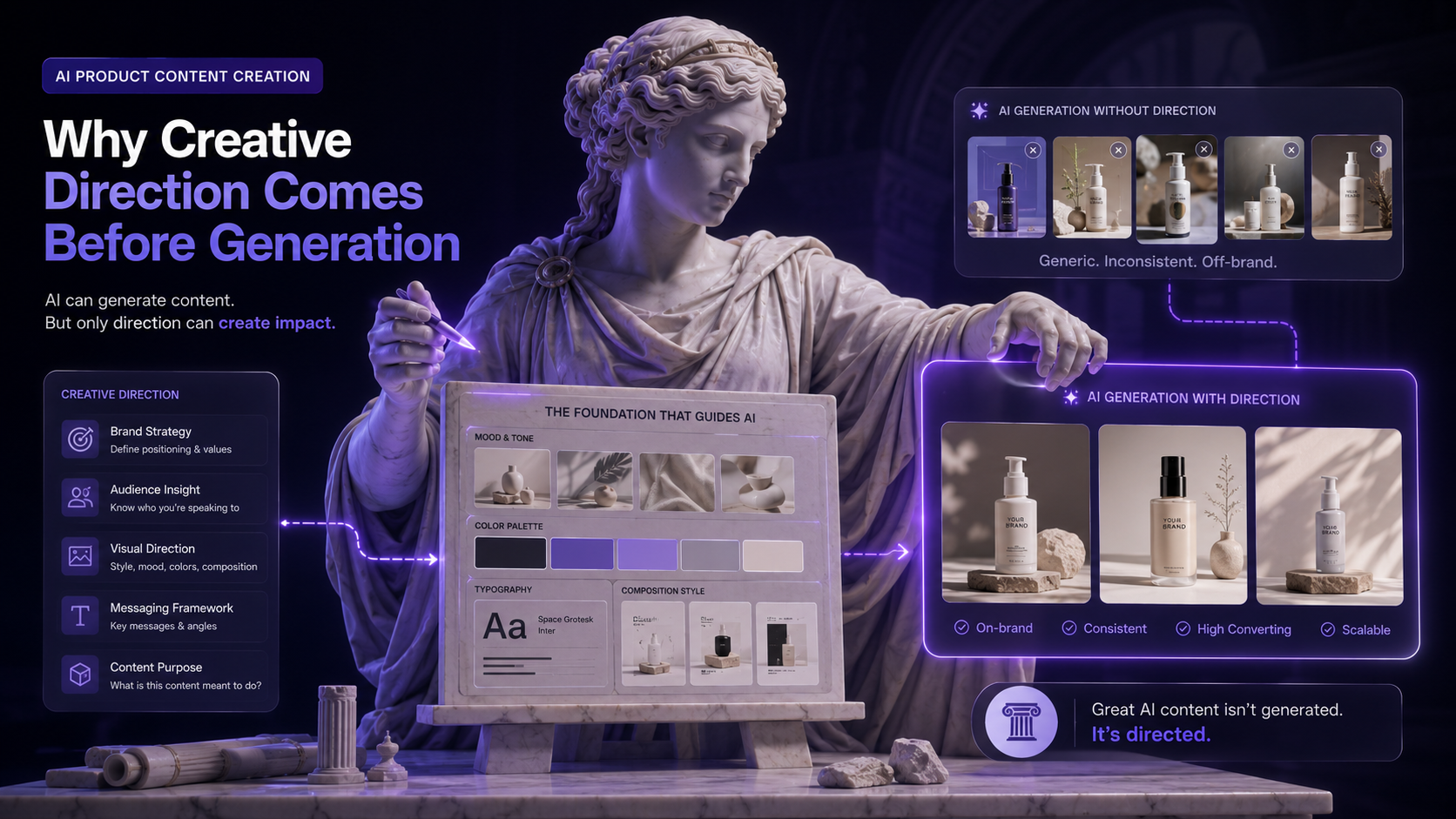
Ecommerce brands are under constant pressure to create more content.
One product launch is no longer limited to a few catalogue images. Brands need product page visuals, lifestyle shots, social media posts, ad creatives, email banners, short videos, marketplace assets, and seasonal campaign content.
That is a lot of content for one product.
AI product content creation helps ecommerce teams move faster. It can help brands create product images with AI, test more visual routes, build campaign assets, and produce more creative variations without planning a full photoshoot for every new idea.
But faster generation does not automatically mean better content.
Most ecommerce teams do not need another image generator. They need help deciding which products to feature, which campaign angles to test, which audiences to target, and which visuals should be created first.
In other words, they need creative direction.
This is where the idea of an AI Creative Director becomes important. The real value is not only in generating product visuals. It is in helping teams decide what content should be created, why it matters, and how each asset should support the customer journey.
The future of AI product content creation is not only about generating more images. It is about building a better creative system before generation begins.
What Is AI Product Content Creation?
AI product content creation is the use of AI to plan, create, and adapt ecommerce content around a product.
This can include product images, AI product photography, lifestyle visuals, fashion shoots, ad creatives, product videos, social media posts, email banners, marketplace assets, and launch campaign visuals.
It is broader than using AI to generate one image.
For ecommerce brands, AI product content creation helps turn one product into many useful content formats. A clean product photo can become a studio-style image, a lifestyle shot, a social creative, a product page banner, or an ad visual.
But the best results come when the brand knows the role of each asset.
A skincare product can be shown through ingredients, results, daily routine, science, luxury, simplicity, or self-care. AI can create visuals for all of these angles. The real question is which angle matters for the campaign.
That decision comes before the prompt.
Why Ecommerce Brands Need More Product Content
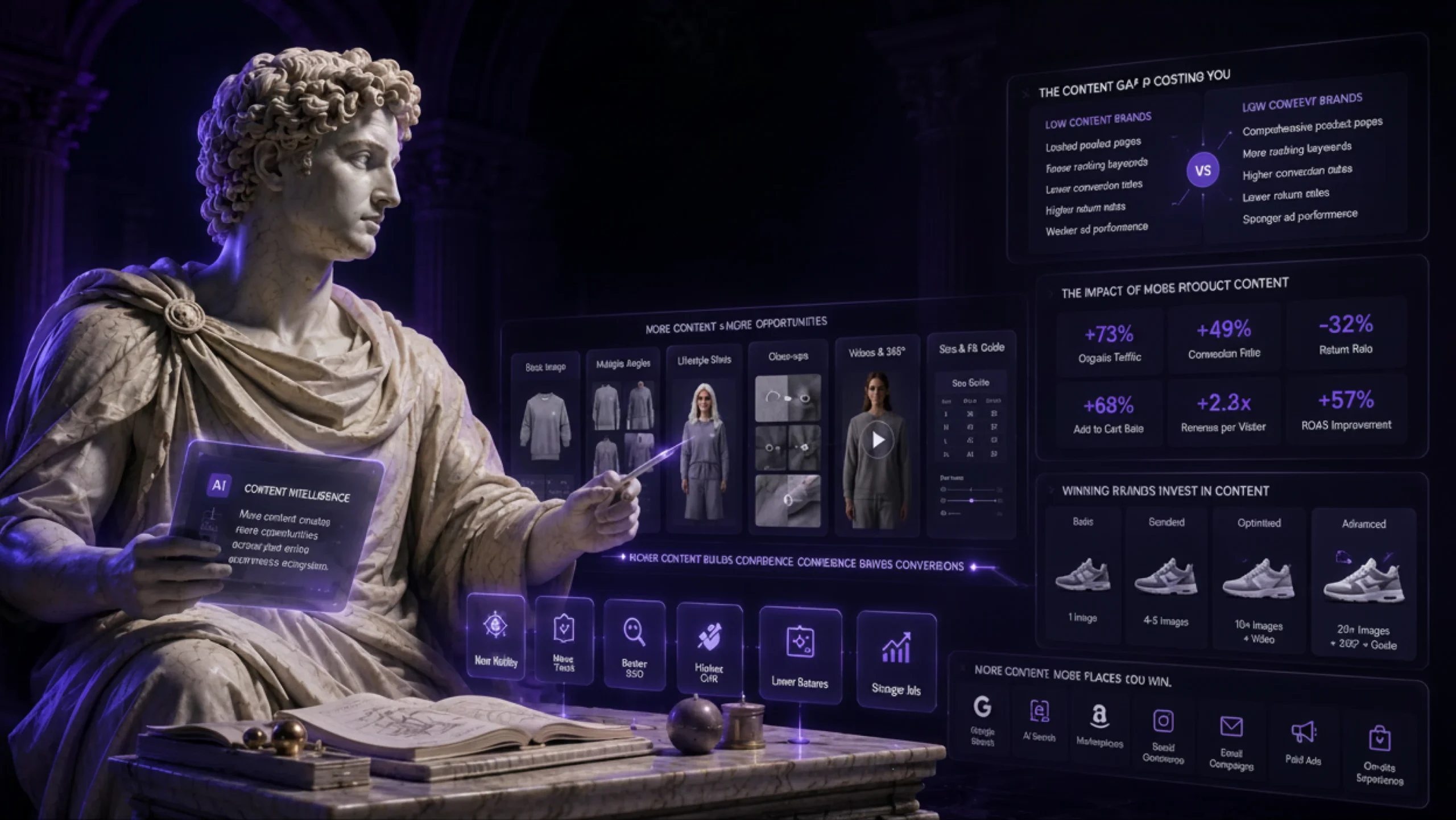
Ecommerce has become more visual and more fragmented.
A shopper may first see a product in an Instagram ad, then check the product page, compare reviews, open an email, search on Google, ask an AI engine, and later return through a retargeting campaign.
Each touchpoint needs product content that does a different job.
A product page visual may need clarity. An ad creative may need a strong hook. A social post may need emotion or aspiration. An email visual may need campaign context. A marketplace image may need clean product presentation.
This is why one product image is no longer enough.
Traditional ecommerce product photography is still useful, but it can be slow when every launch needs multiple versions across many channels. AI product content creation helps teams create more assets faster.
But speed only helps when the content has a clear role.
If every visual says the same thing, the brand ends up with more content, not better content.
Why AI Product Content Often Misses the Mark
AI product content usually fails for two reasons.
The first reason is execution. The product shape changes. The label becomes unclear. The lighting feels off. The model pose looks unnatural. The image may look polished, but it does not feel real.
The second reason is strategy. The image looks good, but it does not support the product, audience, or campaign goal.
This is similar to a broader problem many ecommerce brands face with AI adoption. Teams often generate content before defining positioning, messaging, and brand context. As discussed in our guide on AI brand management, stronger outputs usually come from stronger strategic direction, not only better prompts.
A clean skincare image may look premium, but if the campaign is about sensitive skin, the visual may need calmness, routine, trust, and ingredient clarity. A fashion image may look stylish, but if the goal is daily wear, the visual should feel wearable rather than editorial.
AI can make the image. It cannot automatically decide the strongest product story without direction.
That is why AI product content creation needs creative thinking before visual execution.
Creative Direction Comes Before the Prompt
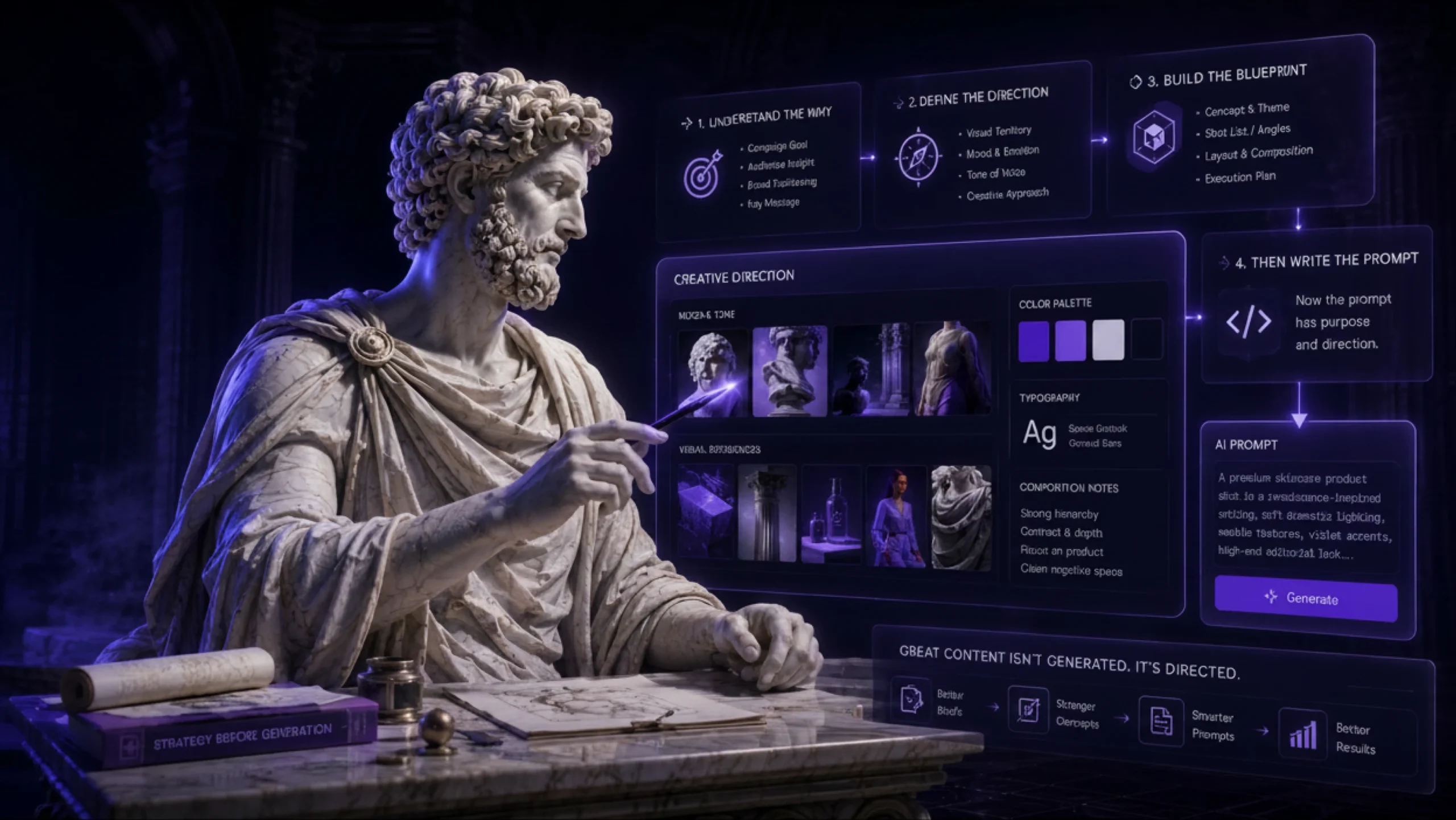
Most brands think AI product content starts with a prompt.
In reality, the prompt is one of the last steps.
Before writing the prompt, a brand should know the audience, product positioning, campaign goal, product story, and content format.
Good AI product photography should answer:
| Question | Why It Matters |
| What is the product? | Keeps the visual accurate |
| Who is it for? | Shapes the audience and setting |
| What should the buyer feel? | Guides mood, lighting, and styling |
| What should the buyer understand? | Defines the product message |
| Where will this visual be used? | Shapes format and composition |
| What campaign angle does it support? | Gives the asset a clear job |
Take one moisturizer as an example.
The same product can be shown as ingredient-led, routine-led, outcome-led, science-led, luxury-led, simplicity-led, lifestyle-led, or gifting-led.
All of these routes can be useful, but they do not serve the same purpose.
An ingredient-led visual should make the formula easier to understand. A routine-led visual should show how the product fits daily life. A luxury-led visual should create aspiration. A gifting-led visual should feel warm, emotional, and occasion-ready.
The creative angle gives the image a job.
Without that job, AI product content creation becomes random. With it, AI becomes a faster way to execute a clear product story.
What Content Should You Create First?
Not every ecommerce brand needs every asset at once.
A smarter AI product content creation workflow starts by deciding which content matters most for the product stage, campaign goal, and channel.
For a new launch, the first priority may be a hero visual, product announcement post, email banner, ad creative, and product page images.
For an existing product with low conversion, the priority may be clearer product page content. The brand may need close-up details, usage visuals, comparison images, or lifestyle shots that answer buyer questions.
For a product with weak ad performance, the priority may be creative testing. The brand may need multiple hooks, lifestyle versions, offer-led creatives, and format variations.
For a product entering marketplaces, the priority may be clean, trust-building images that make comparison easier.
A useful content plan may include:
- Product page assets for clarity and conversion
- Launch assets for campaign storytelling
- Ad creatives for testing hooks and angles
- Social content for awareness and engagement
- Email visuals for retention and campaign pushes
- Marketplace assets for clean product comparison
This is not only a production task. It is a prioritization task.
AI can help create all of these assets, but ecommerce teams still need to decide what should come first.
Audience-Specific Creative Direction Matters
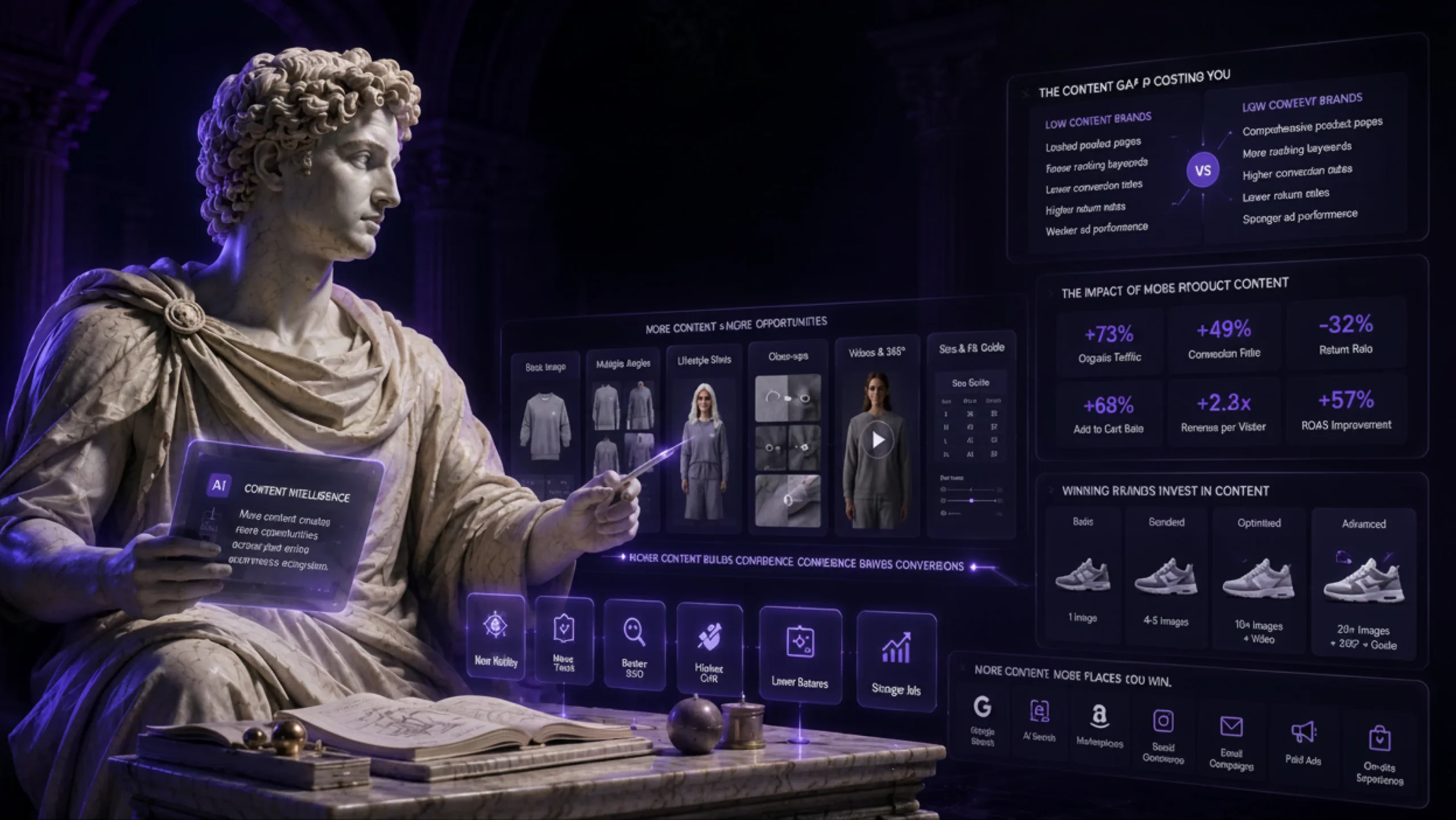
The same product can need very different visuals for different audiences.
A first-time buyer may need education. They want to understand what the product does, how to use it, and why it is worth trying.
A repeat customer may need a new reason to buy again. They may respond better to bundles, routines, seasonal use cases, or new campaign stories.
A luxury audience may respond to minimal styling, premium textures, refined lighting, and clean product framing.
A price-sensitive shopper may need clarity, value, proof, and simple product benefits.
A gifting audience may need emotional, occasion-led, or festive visuals.
This is why AI lifestyle product images should not be created randomly. The setting, mood, model, props, and framing should match the buyer’s mindset.
The same candle can be shown as a self-care product, a home decor product, a festive gifting product, or a premium wellness product. Each angle changes how the buyer understands the product.
AI generation is easy. Choosing the right story is harder.
How to Create Product Images With AI the Right Way
To create product images with AI, start with the job the image needs to do.
A product page image may need to explain size, texture, usage, or packaging. An ad creative may need to stop the scroll. A social post may need to build a mood. An email banner may need to support a campaign message.
Once the role is clear, the visual direction becomes easier.
The product should remain the hero of the image. The background, props, model, lighting, and format should support the product story rather than distract from it.
A stronger process looks like this:
- Decide the content goal
- Choose the audience
- Select the campaign angle
- Pick the channel format
- Define the visual mood
- Generate the asset
- Review it before publishing
The input image still matters. A blurry, dark, or badly cropped product image will usually lead to weaker AI output. A clean product image with clear edges, accurate color, visible packaging, and minimal clutter gives AI a stronger base.
Realism still matters too. Product shape, logo, label, scale, texture, and color should stay accurate. This is especially important for beauty, food, fashion, jewelry, supplements, electronics, and home decor, where product accuracy directly affects trust.
AI can create many versions quickly, but not every version will be useful. The best outputs are the ones that match the product story and the channel objective.
Use Lifestyle and Fashion Visuals With Purpose
AI lifestyle product images are useful when they show the product in a believable context.
A coffee product can appear in a kitchen. A candle can sit on a bedside table. A handbag can be shown in a travel setting. A skincare product can appear on a bathroom shelf. A sneaker can appear in a streetwear setting.
But the scene should not be chosen only for aesthetics.
A skincare routine visual supports daily use. A bathroom shelf visual supports familiarity. A clinical setup supports science and trust. A soft morning setup supports comfort and self-care. A premium vanity setup supports luxury.
The best lifestyle visuals feel natural, but they also have a clear reason to exist.
The same applies to AI fashion photography.
Fashion needs more than a nice model and background. A fashion visual should clarify how the product is worn, what mood it creates, and who it is meant for.
The same shirt can be styled as office wear, streetwear, travel wear, festive wear, or everyday comfort. Each version changes the buyer’s perception of the product.
AI fashion photography works best when the brand defines the styling route first. After that, teams can review fit, fabric, proportions, color, and product accuracy before using the image on product pages, ads, or campaign content.
Why Brand Context Matters
One reason AI product content feels weak is brand drift.
The product may look fine, but the image does not feel like the brand.
The background, lighting, model style, color palette, and campaign mood may feel disconnected from how the brand usually presents itself.
This is where Brand Memory AI for ecommerce becomes important.
For ecommerce brands, Brand Memory helps AI understand the brand before creating new content. It can hold details like brand colors, visual style, photography preferences, tone of voice, product information, campaign references, approved examples, and past creative decisions.
Brand consistency is not only about colors and image styles. It is also about creative patterns. Which campaign angles work? What visual themes perform best? What product stories resonate with customers?
When AI remembers these patterns, product content becomes more strategic instead of purely generative.
This helps teams create content that feels consistent across the website, ads, email, social media, and marketplace listings. For shoppers, that consistency builds trust.
How Spaces Help Organize Creative Work
Many teams struggle with AI content because they use it randomly.
They write a prompt, generate a few images, download one, and repeat the same process for another channel.
That can work once or twice, but it becomes messy when a brand needs many product visuals across different ecommerce goals.
Spaces help organize AI product content creation around repeatable creative workflows. Instead of treating every task as a blank prompt, teams can choose workflows around the type of content they need to create.
A product launch workflow may include hero visuals, product announcement posts, product page images, email banners, and campaign creatives.
An ad testing workflow may focus on hooks, lifestyle variations, offer-led creatives, and format versions for paid channels.
A product photography workflow may focus on clean product shots, AI product photography, close-up details, AI lifestyle product images, and catalogue visuals.
This makes Spaces more than a place to generate images. Spaces help teams organize creative execution around the objective of the content.
The strategy still comes first, but the production process becomes easier to repeat, review, and scale.
How AI Product Content Supports SEO, AEO, and GEO
AI product content creation can support SEO, AEO, and GEO when every product asset tells the same clear story.
For SEO, product images should be supported by descriptive file names, useful alt text, and page copy that explains the product clearly. Search engines need context to understand what the visual is showing.
For AEO, product content should answer buyer questions directly. A shopper may want to know what the product looks like in use, who it is best for, how it fits into a routine, or what problem it solves.
For GEO, consistency matters even more. AI search engines look for clear signals across product pages, FAQs, reviews, descriptions, images, and brand content before they summarize or recommend a product.
This is why creative direction matters.
If the product page says the item is simple and everyday-friendly, but the visuals make it look like a luxury party product, the message becomes unclear.
Strong AI product content helps shoppers, search engines, and AI engines understand the same thing: what the product is, who it is for, and why it matters.
Where Monica Fits In
For ecommerce teams that want to move beyond random image generation, Monica, the AI Creative Director, fits naturally into this workflow.
Monica helps teams think through campaign angles, visual direction, product storytelling, and creative routes before assets are created.
That fits the real challenge behind AI product content creation.
Most brands do not struggle only with creating more images. They struggle with creative planning, campaign ideation, content prioritization, visual strategy, and cross-channel campaign thinking.
They spend time deciding which product to feature, which audience to speak to, which campaign angle to test, which channel needs assets first, and which version should go live.
Monica helps bring those decisions into one workflow.
Brand Memory gives Monica context about the brand’s style, product story, audience, and past decisions. Spaces help organize creative execution around specific ecommerce goals. Refine helps teams improve outputs before they go live.
In many ecommerce teams, the bottleneck is no longer content production. The bottleneck is creative direction.
A random AI image generator may create a good-looking image. But an AI Creative Director helps ecommerce teams create product content that is more strategic, more consistent, and better connected to real campaign goals.
You can also read how ShopOS agents work together in the AI platform for ecommerce brands model.
Common Mistakes to Avoid
Many ecommerce brands start using AI tools without setting content priorities first.
That is where weak AI product content begins.
Avoid these mistakes:
- Creating visuals before defining the campaign angle
- Using the same image style for every channel
- Choosing backgrounds only because they look nice
- Ignoring audience differences
- Generating too many options without a review process
- Letting AI change the product story
- Skipping brand memory and past performance learnings
- Treating prompts as strategy
- Publishing assets that do not support the campaign goal
AI should make product content easier to create, but it should not replace the thinking that makes content useful.
Final Takeaway
The future of AI product content creation is not better image generation. It is better creative direction.
The brands that win will be the ones that know what content to create, why it matters, and how every asset supports the customer journey.
If you want to create product images with AI, start before the prompt. Decide the content goal, audience, channel, and story first. Then use AI product photography, AI lifestyle product images, AI fashion photography, and campaign-ready assets to bring that strategy to life.
AI can help ecommerce teams move faster. But the brands that win will be the ones that use AI to build a smarter, repeatable product content system.
Better Product Content Starts Before the Prompt
Monica helps ecommerce teams decide the campaign angle, audience, visual direction, and product story before creative production begins.
Turn product context into purposeful visuals, campaign assets, lifestyle content, and creative variants without relying on random generation.
Book a Demo to See Monica in Action
FAQs
What is AI product content creation?
AI product content creation is the process of using AI to plan, create, and adapt ecommerce content around a product. This can include product images, lifestyle visuals, product photography-style shots, ad visuals, email banners, product videos, and campaign assets.
How can ecommerce brands create product images with AI?
Ecommerce brands can create product images with AI by starting with a clear content goal, choosing the right audience and channel, using a clean product photo, selecting a visual direction, and reviewing each output before publishing.
What is AI product photography?
AI product photography is the use of AI to create product visuals that look like professional product photos. It can include studio images, lifestyle shots, background changes, model-led visuals, and campaign-ready product images.
Are AI lifestyle product images good for ecommerce?
Yes, AI lifestyle product images can be useful when they show the product in a realistic setting and support a clear product story, such as routine, luxury, everyday use, gifting, or product education.
Why does AI product content need creative direction?
AI product content needs creative direction because brands must decide what story, audience, visual route, and campaign goal the content should support before generating assets. Without direction, AI may create attractive visuals that do not support the product or campaign.