

- What Is AI Brand Memory for Ecommerce?
- The Memory Problem No One Talks About
- Why Creative Knowledge Leaves When People Leave
- The Tribal Knowledge Trap in Ecommerce Agencies
- What Taste Actually Means for Ecommerce Brands
- Taste Is Revealed Through Decisions
- Why AI Brand Memory Is Possible Now
- Why AI Without Memory Still Feels Generic
- How to Make AI Understand Your Brand
- The Creative Context Graph Behind Brand Memory
- What ShopOS Has Learned About Brand Memory
- Why AI Brand Memory for Ecommerce Compounds Over Time
- What ShopOS Brand Memory Changes Practically
- The Cross-Brand Layer
- Why AI-Powered Brand Consistency Needs Persistent Memory
- Your Move: The Brand That Remembers Wins
- Summary
- FAQ
There is a moment in every brand’s life that almost no one documents.
It rarely looks dramatic. It usually looks like a normal Tuesday.
Your creative director puts in her notice. She has been with you for three years. She knows why the brand moved away from flat-lay photography in 2022. She knows the founder rejects anything that feels too polished, too cold, or too similar to a competitor. She knows the 35-to-50 customer responds to understatement, while the 25-to-34 customer responds to sharper energy. More importantly, she knows where that line sits.
She walks that line every day without needing to explain it.
She built that knowledge across thousands of small decisions.
A headline approved here. A product image rejected there. A founder comment during a Monday creative review. A campaign that looked beautiful but failed. A scrappy ad that looked ordinary but converted. A word removed because it felt too generic. A visual killed because it looked right on the mood board but wrong for the brand.
Then she leaves.
By Monday, the brand still has its assets, guidelines, folders, dashboards, campaign calendar, and performance reports.
But something important is gone.
All of it.
The instinct. The taste. The quiet decision-making layer that helped the brand sound like itself.
That is the problem AI brand memory for ecommerce is built to solve. It turns scattered creative decisions, approvals, rejections, edits, performance signals, and outcomes into a living system that AI can learn from. The goal is simple but powerful: make sure the brand does not forget what it already knows.
Her replacement may be excellent. Strong portfolio. Great references. Comfortable with Meta, TikTok, email, landing pages, creative testing, product pages, and campaign planning.
But he does not know what it feels like inside this brand yet.
He does not know that aspirational lifestyle imagery was tested for eight months and never once outperformed a simple studio product shot. He does not know that UGC-style ads with the product visible in the first few seconds beat cinematic intros for this customer almost every time. He does not know that the founder dislikes certain words because they make the brand sound like every other DTC label in the category.
He does not know any of this because none of it was properly written down.
Not in the brand guidelines. Not in the asset library. Not in the Notion wiki someone started and nobody maintained. Not in the Google Drive folder with six versions of “FINAL.”
It was in someone’s head.
And that person took it with her.
What Is AI Brand Memory for Ecommerce?
AI brand memory for ecommerce is a system that captures how an ecommerce brand thinks, decides, edits, approves, rejects, and performs across creative and marketing work. Instead of relying only on static brand guidelines or repeated human explanation, it gives AI a structured memory of the brand’s voice, visual taste, product context, customer response patterns, campaign history, and creative outcomes.
For ecommerce teams, this means AI can create with context instead of guessing from generic prompts. It can understand why one headline feels right, why one image gets approved, why one format works for a specific product, and why another campaign failed even though it looked good on paper.
This is the difference between generic AI output and AI with memory. Generic AI creates from broad internet patterns. AI with memory creates from the brand’s own history.
That distinction matters because ecommerce brands do not scale on content volume alone. They scale when the brand stays recognizable, relevant, and consistent across every channel.
The Memory Problem No One Talks About
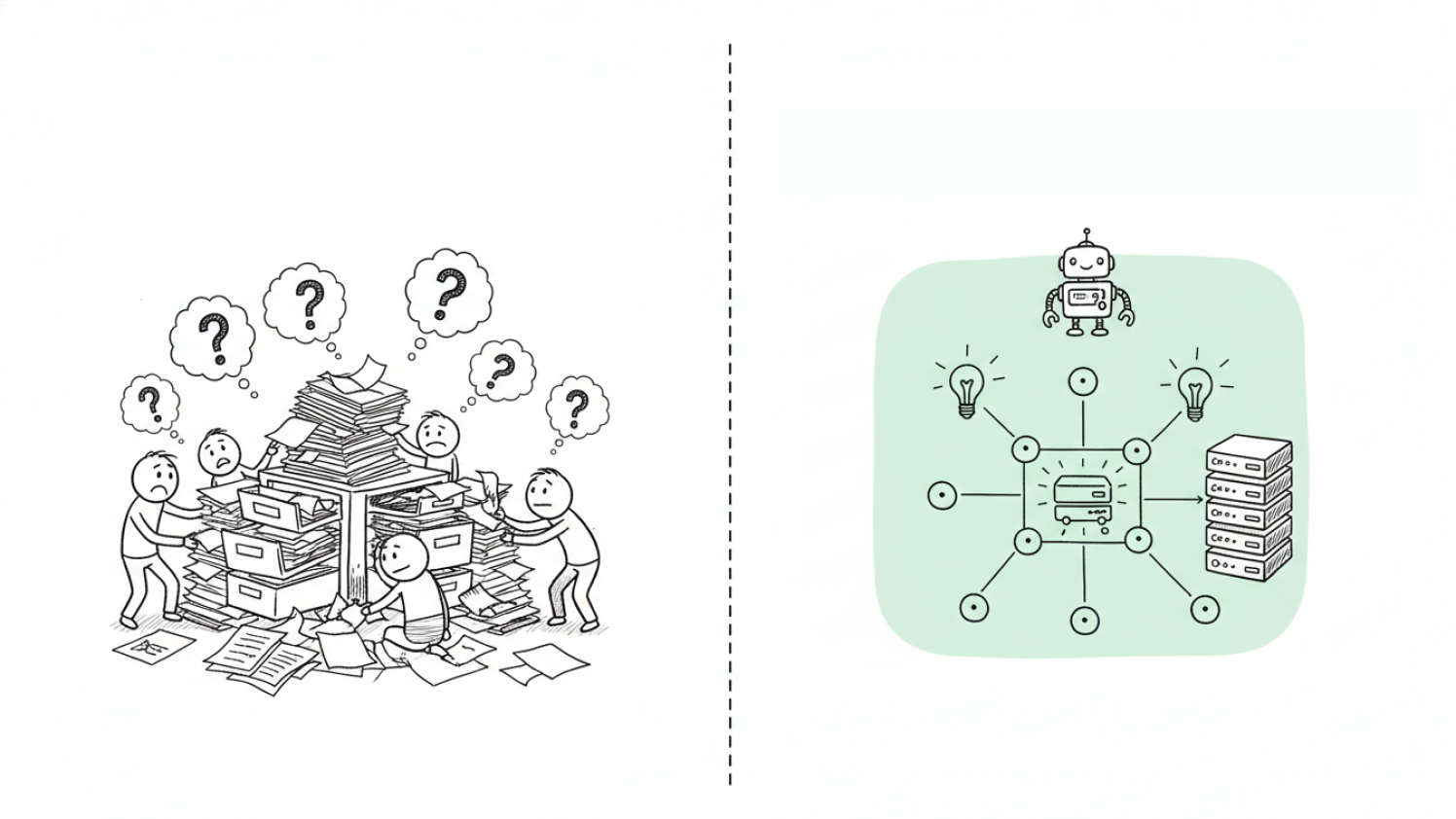
Most brands think their creative knowledge lives in brand guidelines.
It does not.
A brand guidelines PDF can show the logo, colors, typography, tone notes, visual examples, and a few approved phrases. It can explain what the brand wants to sound like. It can list words to use and words to avoid. It can help a new designer avoid obvious mistakes.
But it cannot capture the thousand decisions that shape real brand taste.
It cannot explain why a founder approved one campaign and rejected another. It cannot explain why a simple studio product shot outperformed a lifestyle visual for eight straight months. It cannot explain why UGC-style ads worked for one product category but failed for another. It cannot explain why a certain phrase sounds harmless to outsiders but feels completely wrong inside the brand.
That knowledge usually lives in people’s heads.
It lives with the creative director who has sat through every review. It lives with the performance marketer who remembers which hooks burned out last quarter. It lives with the founder who can sense when something feels off before anyone can explain it. It lives with the agency strategist who has learned the brand through trial, error, and late-night feedback loops.
Then people leave. Agencies change. Teams expand. Files get archived. Slack threads disappear. Figma comments become impossible to trace. A new team joins and starts again.
The brand pays to relearn what it already knew.
Why Creative Knowledge Leaves When People Leave
Every growing ecommerce brand eventually feels this drift.
A new creative lead joins and brings strong experience. They know the category. They know the platforms. They understand Meta, TikTok, email, landing pages, product pages, creative testing, and campaign planning. On paper, they are a great hire.
But they do not know the brand yet.
They do not know that aspirational photography failed for this customer segment. They do not know that founder-led copy outperformed polished campaign messaging. They do not know that one product needs restraint while another needs stronger emotional language. They do not know which words have been tested, which visuals have been killed, and which ideas looked promising but damaged performance.
So the first few months become an expensive learning curve.
The work may look professional. The campaigns may follow best practices. The creative may even look better than before. But something feels slightly off. The brand starts sounding like the category instead of itself.
That is the danger. Brand drift rarely happens through one big mistake. It happens through small creative decisions that lose the original signal.
AI for ecommerce brands can solve this only when it has access to memory. Without memory, AI simply adds more output to the same problem. With memory, it can help preserve the judgment behind the brand.
The Tribal Knowledge Trap in Ecommerce Agencies
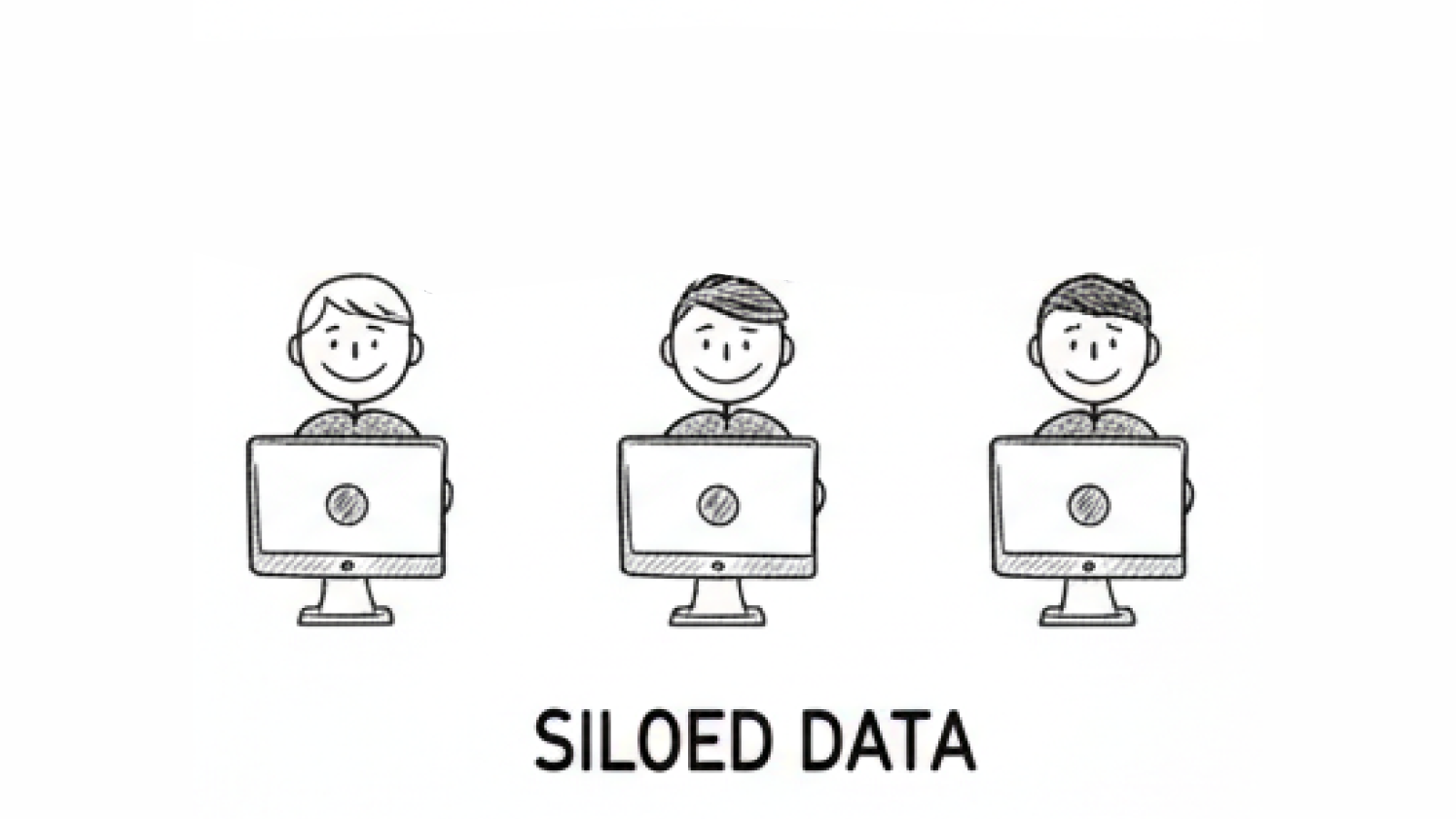
Tribal Knowledge Trap in Ecommerce Agencies
Agencies make the memory problem worse in a very specific way.
The best agency teams build deep knowledge over time. A strategist learns what the founder approves. A media buyer learns which offers perform. A creative lead learns the difference between bold and off-brand. An account manager learns how the team makes decisions before the team has to explain it.
This knowledge is valuable.
But here is the uncomfortable part: it usually belongs to the agency team, not the brand.
A DTC fashion brand, say a contemporary womenswear brand doing around $15M in revenue, hires a performance agency. Over eight months, the agency team develops a strong understanding of the brand. The media buyer learns that broad targeting outperforms lookalikes for the hero product. The creative strategist figures out that quiet confidence messaging beats bold statement messaging for this customer. The account manager knows the founder’s taste so well she can predict which concepts will get killed in review.
None of this is formally documented.
Not in a way that survives the departure of one key person. Not in a way that a new agency can immediately use. Not in a way that becomes permanent infrastructure for the brand.
Now the brand outgrows the agency. Or the relationship weakens. Or the agency rotates the team. Or the brand brings the work in-house.
The result is the same.
Fourteen months of accumulated creative intelligence disappears. Nearly $600K in ad spend has produced real, hard-won learning about what works for this specific brand, this specific customer, at this specific price point.
Gone.
The new agency enters with a discovery phase. A brand immersion week. Mood boards. Stakeholder interviews. Strategy workshops. They are talented people. They may eventually do excellent work.
But first, they spend months testing things the previous agency already tested.
They make mistakes the brand already made.
They burn budget relearning lessons that were already paid for.
The brand pays for the same education twice.
Sometimes three times.
That is the tribal knowledge trap.
The knowledge was real. The problem was that it had nowhere permanent to live.
What Taste Actually Means for Ecommerce Brands
Taste is one of the most important words in creative work, yet it is also one of the hardest to define.
Taste is not simply “premium,” “bold,” “minimal,” “playful,” or “editorial.” Those words are too broad. Many brands use the same words and still look completely different.
Taste is the distance between two acceptable choices when only one feels right for the brand.
A headline like “Designed for your everyday” may be fine. Another headline like “For every day you actually leave the house” may be more specific, more human, and more aligned with the brand. The difference between those two lines is taste.
A visual may match the color palette and still feel wrong. A campaign may follow the brief and still miss the emotional rhythm of the customer. A product image may look polished and still fail because the customer prefers clarity over aspiration.
This is why brand consistency is harder than most teams admit.
Consistency is not only about using the same colors and fonts. It is about making hundreds of creative decisions that feel like they came from one brand mind.
That is where AI-Powered Brand Consistency becomes important. AI can help ecommerce teams produce faster, but speed without memory creates sameness. Speed with memory helps the brand scale without losing itself.
Taste Is Revealed Through Decisions
The deeper insight is simple.
Taste is not a document. Taste is not a description. Taste is a pattern.
Every approval is a signal. Every rejection is a signal. Every edit is a stronger signal.
When a founder changes “Shop the new collection” to “The pieces worth leaving the house for,” that edit says something. It shows a preference for specificity over generic phrasing. It shows voice. It shows attitude. It shows what the brand wants to avoid.
Across one edit, the signal is small.
Across one thousand edits, the pattern becomes powerful.
This is where AI learning systems for brands become more useful than ordinary automation. The system can observe how the brand changes copy, which visuals get approved, what feedback gets repeated, which concepts perform, and which decisions lead to better outcomes.
The brand is already generating intelligence every day. The issue is that most of it evaporates.
It disappears inside Slack threads, Figma comments, Google Doc suggestions, Zoom calls, project management notes, and agency decks that nobody opens again. The intelligence exists. It simply has no structure.
AI brand memory for ecommerce gives that intelligence a home.
Why AI Brand Memory Is Possible Now
Three things changed at the same time.
First, creative work moved onto surfaces that can be observed.
Decisions that once happened around a table with verbal feedback now happen in timestamped digital spaces. Figma comments. Google Doc suggestions. Slack threads. Asana approvals. Creative tools now leave trails. Not because anyone is intentionally documenting everything, but because the work itself now leaves evidence.
Second, language models made messy creative feedback computable.
A message like “love the vibe but the headline feels too salesy, can we make it more editorial” used to be unstructured noise. Now AI can read that feedback, extract the decision signal, connect it to the asset, and understand the preference behind the edit.
That signal may look like this: headline rejected, reason is tone mismatch, preference is editorial over promotional.
What used to be creative exhaust can now become structured data.
Third, AI agents create decision traces as part of the workflow.
When an AI agent generates a set of ad headlines and a human edits one, that edit becomes useful information. The model proposed something. The human corrected it. The gap between the proposal and the correction shows what the brand actually wants.
That is the important part.
Every human override of an AI output teaches the system something. Unlike a verbal note in a creative review, that learning can be captured automatically. It does not require someone to maintain a separate documentation system. It becomes part of the workflow itself.
For the first time, the loop can close.
Why AI Without Memory Still Feels Generic
Many ecommerce teams have already tried AI tools.
They used AI to write product descriptions. They created ad copy variants. They generated social captions. They tested image tools. They experimented with product visual generation. Some outputs were useful. Many were average.
The reason is not that AI lacks capability. The reason is that most AI lacks brand memory.
A generic AI tool can tell you what a product description usually sounds like. It can write ad copy using common frameworks. It can generate ten hooks for a skincare launch or a fashion drop. But it does not know what your brand has already tried. It does not know which phrases your founder hates. It does not know which product angles worked last season. It does not know which customer segment responds to restraint and which responds to provocation.
Without memory, AI guesses.
With memory, AI learns.
This is the core difference between a normal AI tool and AI-powered brand management. One produces outputs. The other builds a system of understanding around the brand.
How to Make AI Understand Your Brand
The question many teams ask now is simple: How to make AI understand your brand?
The answer is not better prompting alone.
Prompting can help, but prompts are usually temporary. They rely on someone remembering what to include. They often repeat the same context again and again. They depend on whoever is using the tool that day.
To make AI understand your brand, the system needs persistent memory. It needs access to the brand’s creative history, product positioning, customer segments, approved assets, rejected ideas, founder feedback, campaign performance, and repeated decision patterns.
It needs to know what the brand says.
It also needs to know what the brand refuses to say.
It needs to know which visuals performed.
It also needs to know which beautiful visuals failed.
It needs to know what the team approved.
It also needs to know why the team edited, rejected, or paused something.
This is why persistent memory for agentic AI matters. When agents can remember the brand’s decisions, they become more useful over time. They stop behaving like disconnected tools and start behaving like a system that understands the brand’s operating logic.
For ShopOS, this memory layer is Brand Memory.
The Creative Context Graph Behind Brand Memory
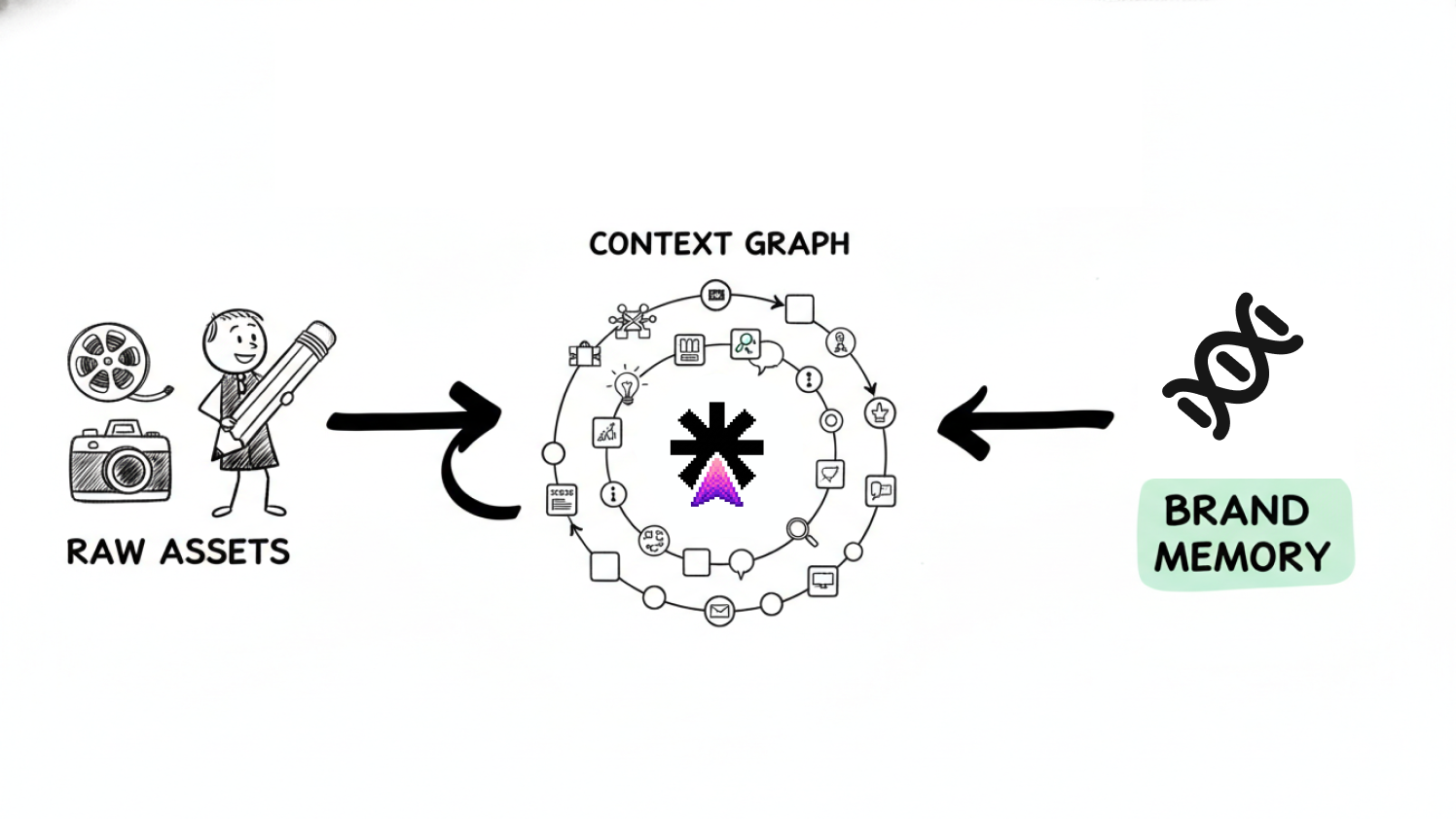
ShopOS Brand Memory is not a folder. It is not a static document. It is not another brand book that gets written once and forgotten.
It is a structured creative context graph that connects the brand’s decisions, assets, edits, feedback, and outcomes.
This graph helps AI agents understand not only what was created, but why it was created, how it changed, what was approved, what was rejected, and what happened after the campaign went live.
That is the foundation of AI brand memory for ecommerce.
Asset-Level Decisions
Every product photo, ad visual, campaign image, and creative concept carries decision signals.
Which image was approved? Which one was rejected? What feedback was given? Did the team ask for warmer lighting, cleaner composition, a more direct product angle, or less editorial styling?
These decisions reveal visual taste at a level no static guideline can capture.
Over time, Brand Memory can identify patterns in how the brand approves and rejects visuals. It can understand that one category needs polished product clarity while another can support more expressive creative. It can help future AI outputs start closer to the brand’s real preferences.
Copy Decisions
Copy is full of memory signals.
A headline edited from generic to specific tells the system what the brand prefers. A phrase removed from a product page tells the system what language feels wrong. A subject line that performs well tells the system what customer emotion matters at that stage.
These changes build a linguistic fingerprint of the brand.
For AI with memory, edits are more valuable than approvals. An approval says something worked. An edit shows how the brand thinks.
Format and Structure Decisions
Creative performance is not only about words and visuals. Format matters too.
Some brands may find that carousel ads outperform single-image ads for higher-consideration products. Some may find that video testimonials work for one category and fail for another. Some may learn that product-first frames beat cinematic intros.
Without memory, teams repeat the same tests.
With Brand Memory, those patterns become accessible. The next campaign can start from accumulated learning instead of a blank page.
Performance-Linked Outcomes
Brand Memory becomes stronger when creative decisions connect to business outcomes.
It should remember which approved creative actually performed, which edits improved click-through rate, which hooks drove better conversion, which campaigns created stronger retention, and which ideas looked good but failed commercially.
This matters because taste and performance should not live in separate systems.
The best ecommerce brands need both. They need creative judgment and commercial feedback working together.
Cross-Campaign Patterns
One campaign can teach something useful. Ten campaigns can reveal a pattern. One hundred campaigns can build a strategic advantage.
Brand Memory helps teams see how creative strategy changes over time. It can track seasonal shifts, product category differences, audience response patterns, and recurring creative fatigue.
This is where memory becomes a moat.
What ShopOS Has Learned About Brand Memory
Several patterns become visible when creative decisions are captured over time.
First, taste is more consistent than people think, but harder to explain than they realize.
A fashion brand may consistently reject photos where the model pose feels too editorial. When asked to define the difference between editorial and aspirational, the creative lead may struggle. But in the data, the pattern is clear.
The context graph captures what the brief cannot.
Second, edits are more valuable than approvals.
A binary yes or no gives limited information. An edit gives much more. When a marketing head changes “Designed for your everyday” to “For every day you actually leave the house,” that one change reveals tone preference, specificity preference, and voice.
One edit can carry three signals. A thousand edits can build a taste profile with serious precision.
Third, performance memory prevents the most expensive kind of waste: repeated failure.
A CPG brand expanding into DTC ran influencer-style UGC ads for three months because a new agency recommended it. On paper, the idea made sense. The format was popular. The creative looked native to social platforms. The agency had seen it work elsewhere.
But performance stayed weak.
When the brand’s creative history was reviewed inside the system, the pattern was clear. A previous agency had tested nearly identical content eight months earlier. Same format. Same product angle. Same customer reaction. Same result.
The customer was older, more affluent, and more responsive to polished, product-forward creative than raw UGC.
The learning already existed.
But the brand had no system that remembered it.
That mistake cost around $45K in ad spend.
Not because the team lacked talent. Not because the agency was careless. Not because the idea was irrational.
The money was burned relearning something the brand already knew.
This is where AI for DTC brands needs to move beyond content generation. More assets do not solve repeated failure. Faster creative does not help when the same wrong ideas keep coming back under new names.
AI brand memory for ecommerce helps prevent that waste by connecting creative decisions to performance outcomes. It remembers which ideas worked, which ideas failed, which formats fatigued, which edits improved results, and which patterns should guide the next campaign.
The problem was not that the learning did not exist.
The problem was that the learning had nowhere to live.
Why AI Brand Memory for Ecommerce Compounds Over Time
The first month of using AI brand memory for ecommerce gives teams structure.
The third month gives them pattern recognition.
The sixth month gives them sharper prediction.
The twelfth month gives them a creative intelligence layer that a new hire, agency, or AI agent can learn from immediately.
This compounding effect is the real value.
A normal AI tool starts fresh every time. A memory-led system gets better as the brand works. Every approval, rejection, edit, result, and override becomes part of the brand’s operating intelligence.
Month one, the system has a thin memory.
Month three, it knows the brand’s tone, visual rules, winning formats, and audience response patterns.
Month six, it can help predict which ad hooks may work for a product category based on past patterns.
Month twelve, a new hire can onboard into the accumulated creative intelligence of the brand, not just a brand guidelines PDF.
That is something no static document, onboarding deck, or brand immersion workshop can fully provide.
What ShopOS Brand Memory Changes Practically
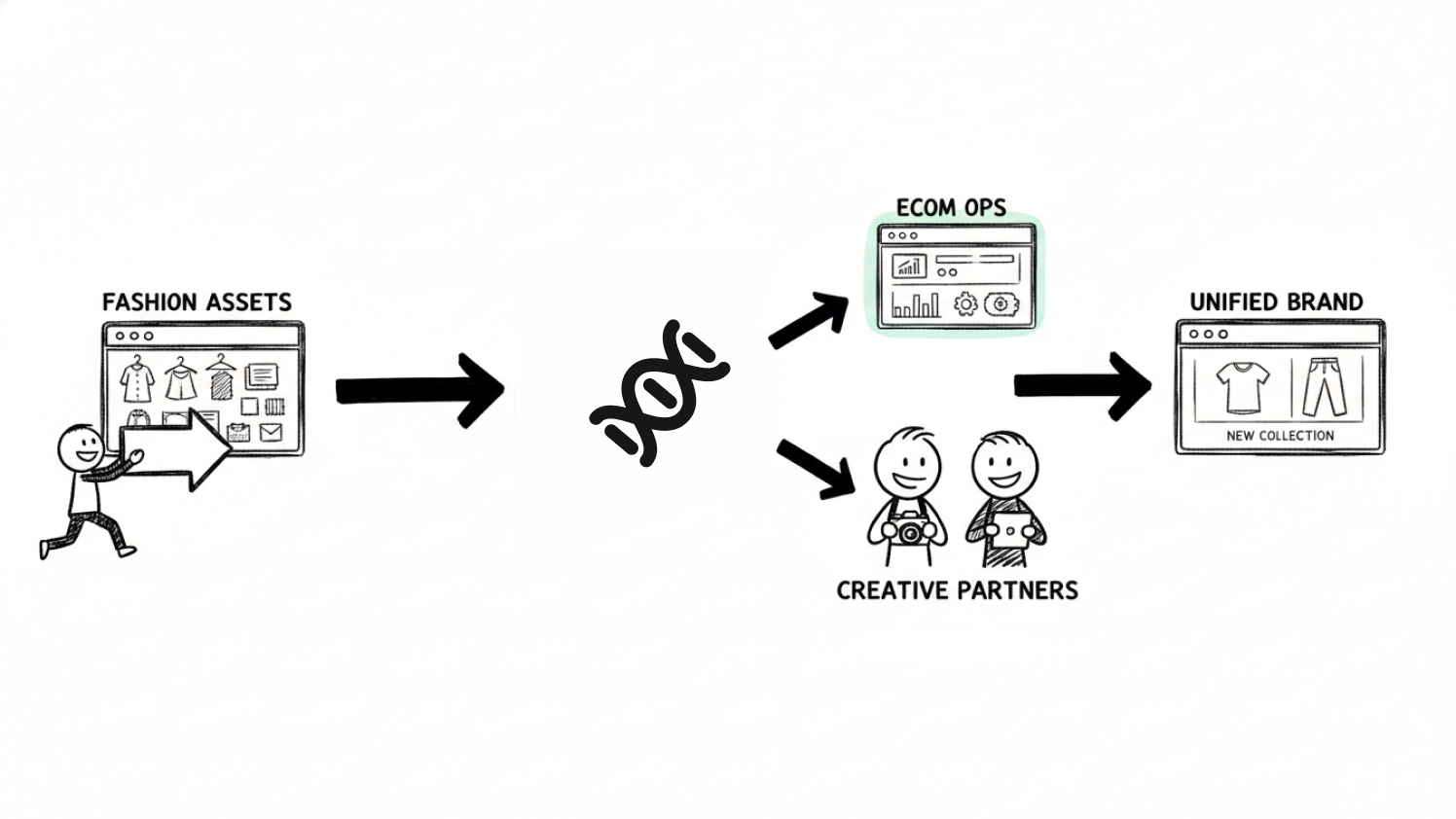
For ecommerce teams, Brand Memory changes the day-to-day operating model.
It reduces the need to repeat the same context in every brief. It helps new team members understand not only brand guidelines, but the decision history behind them. It gives AI agents a stronger starting point. It helps agencies onboard faster. It protects institutional knowledge when people leave.
Most importantly, it helps the brand scale output without losing identity.
For DTC Fashion Brands
A DTC fashion brand may have thousands of product images, campaign assets, seasonal drops, email campaigns, social posts, and performance reports.
The creative challenge is rarely only production speed. It is consistency across product launches, campaigns, channels, and audience segments.
AI for DTC brands becomes much stronger when it can remember which styling choices worked, which tones matched the audience, which formats drove results, and which creative directions the brand has already rejected.
This helps the team move faster without sounding generic.
For Ecommerce Teams
Ecommerce teams often run with lean internal resources. One team may handle product pages, Meta ads, email, landing pages, influencer briefs, social content, and campaign calendars.
AI for ecommerce brands can help with speed, but speed alone can create more scattered output.
Brand Memory gives the work a center of gravity. It helps the same brand logic travel across product descriptions, ad hooks, email flows, visuals, and campaign messaging.
That is where AI-Powered Brand Consistency becomes practical.
For Agencies and Creative Partners
Agencies can also benefit from Brand Memory.
Instead of starting with a thin brief and a few stakeholder interviews, a creative partner can inherit a structured view of the brand’s decision history. They can see what has worked, what failed, what the founder prefers, and where the brand has already evolved.
This reduces onboarding time and prevents repeated mistakes.
It also changes the value of agency work. The work no longer disappears after a campaign ends. The learning stays with the brand.
The Cross-Brand Layer
This is where the idea becomes even more powerful at scale.
When many brands in a category run on ShopOS, each brand builds its own unique Brand Memory. No individual brand’s data needs to cross boundaries. But at an abstracted category level, patterns can begin to emerge.
Which creative formats are working in fashion DTC right now? Which hooks are getting tired? Which seasonal strategies are producing stronger results? What are the early signals of creative fatigue before performance drops show up clearly in reports?
A new brand can benefit from category-level intelligence while still building its own private memory from day one.
This is the network effect.
Each brand that joins makes the system smarter. The accumulated creative intelligence of the category becomes more useful over time, while each brand still keeps its own decision history, taste profile, and performance memory.
Consumer platforms built massive businesses by compounding behavioral traces: clicks, watches, scrolls, saves, hovers.
For ecommerce brands, the more valuable layer is decision traces.
Which images worked. Which words worked. Which formats worked. Which ideas failed. Which edits improved performance. Which creative choices matched the brand’s identity.
And most importantly, why.
Why AI-Powered Brand Consistency Needs Persistent Memory
AI-Powered Brand Consistency is not achieved by asking AI to “write in our tone.”
That instruction is too thin.
Real brand consistency comes from memory. It comes from knowing how the brand has behaved across hundreds of real decisions. It comes from connecting visual choices, copy edits, customer reactions, campaign outcomes, and founder judgment into one living system.
This is why persistent memory matters for agentic AI.
An AI agent that remembers nothing can only produce. An AI agent with Brand Memory can improve. It can understand patterns, avoid repeated mistakes, and get closer to the brand’s real taste over time.
For ShopOS, this is the difference between generic AI assistance and AI-powered brand management.
The system is not only helping the brand create more. It is helping the brand remember better.
Your Move: The Brand That Remembers Wins
Base AI models will keep improving. Every tool will write better copy, generate stronger visuals, analyze more data, and complete more complex tasks.
But better models only raise the floor. They do not create a brand’s advantage.
A base model does not know why one customer responds to understatement while another responds to sharper messaging. It does not know which visuals failed last season, which words the founder keeps removing, or which creative structure works better for one product category than another.
Brand Memory knows.
That is the difference.
The interface can be copied. The workflow can be copied. The model can be accessed by many companies. But a brand’s accumulated creative intelligence cannot be copied without the decisions that created it.
The edits. The rejections. The failed campaigns. The founder feedback. The performance outcomes. The time.
That is why AI brand memory for ecommerce matters. It turns creative history into infrastructure and gives AI with memory access to the brand’s real decision-making pattern.
Generic AI helps teams produce more.
AI-powered brand management helps brands remember better.
The moat is not the model.
The moat is the memory.
Creativity may look like instinct from the outside. But inside a growing ecommerce brand, it has always been a graph of decisions, signals, taste, context, and outcomes.
ShopOS gives that graph a system.
Don’t Let Your Brand Walk Out With Your Best People
Every campaign, rejection, edit, and performance result teaches your brand something.
ShopOS Brand Memory keeps that intelligence inside the business, so the next hire, agency, or AI agent starts with years of context instead of a blank brief.
Make Your Brand Memory Permanent: Book a Demo
Summary
This blog explains why ecommerce brands lose creative intelligence when people leave, agencies change, or teams grow too fast. The core argument is that brand taste does not live in a PDF. It lives in decisions.
AI brand memory for ecommerce captures those decisions and turns them into a living system. It helps AI understand brand voice, creative taste, visual direction, performance patterns, customer response, founder preferences, agency learnings, and campaign outcomes.
This gives ecommerce teams a stronger foundation for AI-powered brand management, AI-Powered Brand Consistency, and smarter creative execution.
The big idea is simple: creativity was never just inspiration. It was always a graph of decisions, context, taste, and outcomes. ShopOS helps brands finally use that graph.
FAQ
What is AI brand memory for ecommerce?
AI brand memory for ecommerce is a structured system that helps AI understand an ecommerce brand’s voice, visuals, product context, creative decisions, customer response patterns, and campaign outcomes. Instead of starting from generic prompts, AI can use the brand’s own history to create more relevant and consistent work.
How does AI with memory improve brand consistency?
AI with memory improves brand consistency by learning from past approvals, rejections, edits, feedback, and performance outcomes. This helps the system understand what feels right for the brand and what should be avoided, making future creative work more aligned across ads, emails, product pages, and campaigns.
How can AI understand your brand?
AI can understand your brand when it has access to persistent context. That includes brand voice, product positioning, customer segments, creative history, founder feedback, approved assets, rejected ideas, campaign results, and repeated decision patterns. A memory-led system gives AI the background it needs to create with better judgment.
Why do ecommerce brands need AI-powered brand management?
Ecommerce brands need AI-powered brand management because they create across many channels at high speed. Without memory, this can lead to inconsistent messaging and repeated mistakes. With Brand Memory, AI can help teams scale creative output while preserving the brand’s identity, taste, and performance learning.
Is ShopOS an AI agent platform for ecommerce brands?
Yes. ShopOS is positioned as an AI agent platform for ecommerce brands that helps teams manage creative, marketing, content, and brand workflows through specialized AI agents connected by Brand Memory. This allows agents to work from the brand’s actual context instead of generic instructions.