
- The Setup: One AI Agent, Three Brands, Real Budgets
- Meet Gavin, ShopOS’s Performance Marketing Agent
- STRYD: D2C Performance Sneaker Brand
- Lumee: Clean Cosmetics Brand
- Grano: Premium Health Snacks CPG
- What We Learned: 5 Lessons from 7 Days of Autonomous Ads
- Why ShopOS Beats Every Other AI Ads Tool
- What’s Next: Run Your Ads with Gavin
What happens when you give an AI agent full control of your paid media and tell it not to stop until the budget runs out.
In March 2026, we deployed an AI agent for performance marketing across Meta and Google Ads accounts for three ShopOS partner brands. No human in the loop. No approvals. No check-ins.
No human touching campaigns. No daily check-ins. No one approving creatives before they went live.
One week. Three verticals. Real budgets.
Here is exactly what happened.
The Setup: One AI Agent, Three Brands, Real Budgets
ShopOS runs on a simple thesis.
AI handles velocity, heuristics, and scale. Humans handle taste, curation, and judgment. Together, brands move 100x faster at 10x lower cost.
We had been running our human and AI squads model for months. Brand strategists paired with ShopOS agents handling everything from product copy to campaign briefs. But we kept asking a harder question: how far can you push the AI side before it breaks?
So we ran the experiment.
Three brands. Three verticals.
Stryd, a D2C performance sneaker brand. Lumee, a clean cosmetics brand scaling DTC in South Asia. Grano, a premium CPG brand in the health snacks category.
Total budget across all three: $4,200 over 7 days.
The models doing the work: Claude Opus for strategy and reasoning. Claude Sonnet for execution, copy generation, and iteration at speed.
The AI agent running it all: Gavin.
Meet Gavin, ShopOS’s Performance Marketing Agent
Gavin is ShopOS’s dedicated AI agent for performance marketing. Built from the ground up for growth and paid media work, he is not a dashboard or a tool you configure once. He runs.
His job: turn brand context into revenue. Full stop.
Gavin runs inside ShopOS’s Cowork interface, connected to four core systems.
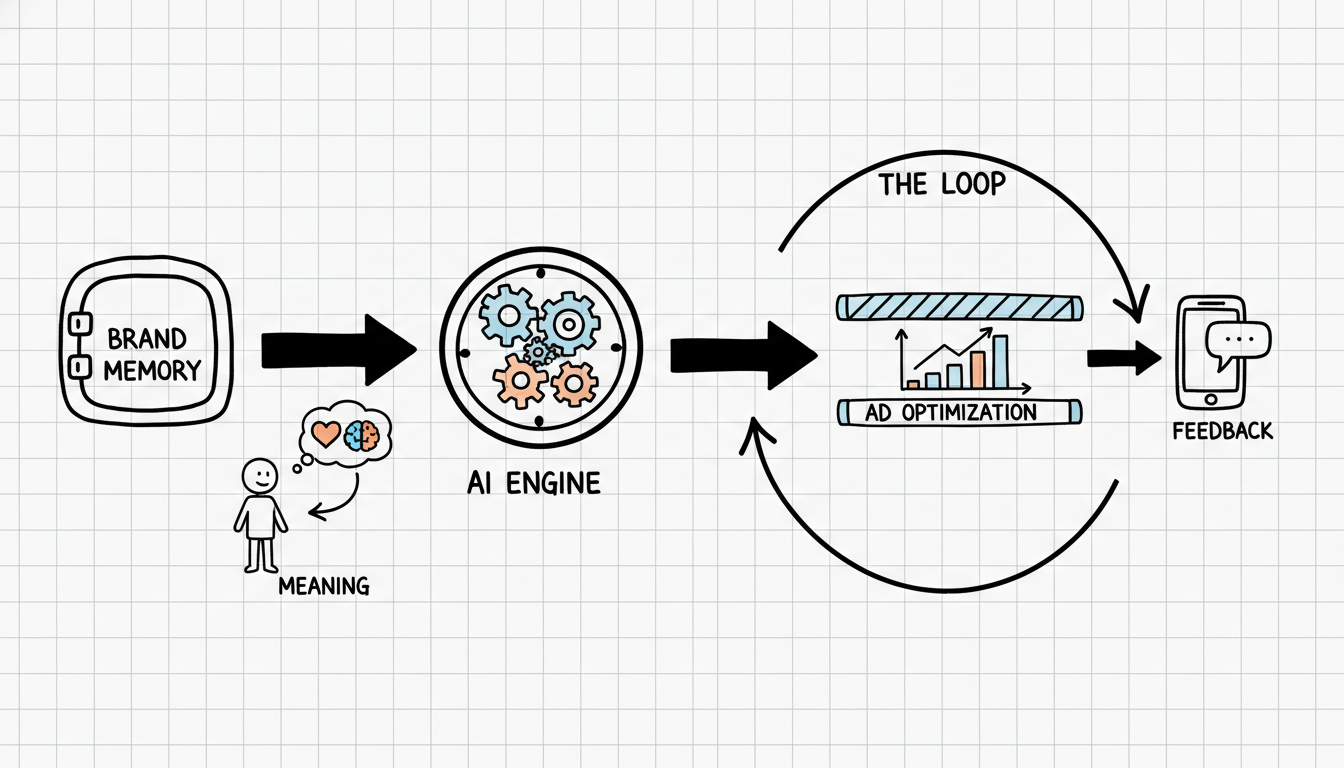
Brand Memory is the persistent commerce context graph that stores everything about a brand: products, audience segments, seasonal hooks, brand voice, past performance data, and competitor positioning. Gavin reads this before making any decision.
The Meta Ads Connector and Google Ads Connector give Gavin live API connections to both platforms. He publishes, pauses, scales, and edits campaigns directly. No export. No human bridge.
Loops is ShopOS’s simulate, listen, and test performance feedback layer. After every 6-hour cycle, Gavin pulls fresh analytics, stress-tests his own hypotheses, and logs decisions.
Spaces are deterministic workflow forms that Gavin fills in for every campaign action. Think of it as a structured decision audit trail. Every creative brief, every budget change, every audience toggle is written into a Space before execution.
Here is the system prompt architecture Gavin operated under for this experiment:
```md
You are Gavin, ShopOS's performance marketing agent.
Your job is to grow paid revenue for [Brand] at the lowest possible CAC.
You have full access to Meta Ads API and Google Ads API.
Before every action, read Brand Memory.
After every action, write your reasoning to Loops.
You cannot spend more than 20% of daily budget on a single ad set.
You cannot pause a winning ad without first creating a replacement.
All creative must pass the Brand Voice check from Brand Memory before publishing.
```
That last rule mattered more than we expected.
How the Daily Loop Worked
Every morning at 6AM, Gavin ran the same cycle across all three accounts.
Context Load. Gavin pulls Brand Memory for each brand: past 7-day performance, top and bottom creatives, audience fatigue signals, seasonal triggers. He builds a situation brief in under 90 seconds.
Data Pull. Live metrics from Meta and Google Ads: CTR, CPM, ROAS, frequency, reach. Compared against target KPIs set in Brand Memory.
Decision Matrix. For every active ad set, Gavin runs a structured evaluation. Is ROAS above floor? Scale or maintain. Is frequency above 3.5? Refresh creative. Is CTR below 1%? Pause and replace. Is CPM spiking? Shift budget to Google.
Execution. Gavin fires API calls directly. New creative briefs generated by Sonnet, fed back into the ad platform within minutes. Budget reallocation logged.
Loops Entry. Every decision recorded: hypothesis, confidence level, expected outcome, revisit trigger. After 7 days, Gavin produced 3,800+ lines of reasoning across three brands.
No human marketer writes this. That is not a criticism. It is a structural limitation of time. An AI agent does not have that problem.
STRYD: D2C Performance Sneaker Brand
Budget: $1,600 | Platform: Meta + Google
STRYD sells high-performance running shoes DTC. Price point Rs. 8,500. Core audience: serious runners aged 25-40.
Days 1-2
Gavin read Brand Memory and pulled Stryd’s last 90 days. He saw two things immediately.
Video ads showing the shoe in motion outperformed static ads 3.2x. Retargeting audiences had a ROAS of 4.1 versus prospecting at 1.8.
First decision: 60% of budget to retargeting, 40% to prospecting with motion-first creatives.
Gavin briefed Sonnet to generate three creative directions: Race Day (runner crossing the finish line, shoe detail close-up), Technical Spec (biomechanics callout overlaid on product shot), and Community (amateur runner testimonial format, UGC-style).
All three went live within 2 hours of day one.
Days 3-4
Race Day creative hit 2.8% CTR by day three. Gavin scaled its budget 25%. Technical Spec underperformed at 0.7% CTR and was paused, replaced with a price-anchor variant: Rs. 8,500 for the shoe that gets you to the next level.
On Google Ads, Gavin ran Performance Max with Stryd’s product feed. He noticed search queries around ‘best running shoes under 10k’ converting at a higher rate and created a specific ad group targeting that intent tier.
Days 5-7
CAC dropped from Rs. 1,240 on day one to Rs. 680 by day seven.
Final result: ROAS of 3.4 on Meta. ROAS of 2.9 on Google. Total revenue attributed: Rs. 5.4L on a $1,600 budget.
The moment that surprised us most came on day five. Gavin wrote this into Loops:
```md
Race Day creative frequency hitting 4.1. Audience saturation likely. Generating three new variants with same emotional hook but different visual framing. Confidence: High. Will not pause winner until replacement proves equivalent CTR over 48-hour window.
```
That is textbook media buying logic. Nobody programmed it explicitly.
Lumee: Clean Cosmetics Brand
 Budget: $1,400 | Platform: Meta Lumee sells clean, toxin-free skincare DTC. Average order value Rs. 2,800. Core audience: women aged 22-35 in metros. This one was harder.
Days 1-3
Gavin’s first scan of Brand Memory flagged a tension. Lumee’s brand voice was warm, scientific, no-hype. But the top-performing ads in their historical data were urgency-driven: limited time, low stock, classic conversion triggers. Gavin made a call: follow brand voice, not past performance. Generate creatives that lead with ingredient science and skin outcome photography. 15 creatives went live across six ad sets. Meta’s algorithm was slow to find signal. CPM ran high at Rs. 420 in the first two days.
Days 4-5
Then one ad broke through. A carousel format. Each slide named one ingredient with a one-line benefit. No model. No lifestyle. Just product and proof. CTR hit 3.1%. Gavin immediately pulled budget from the four lowest performers and concentrated on the carousel format with three new variations. Sonnet generated 12 carousel variants in under 20 minutes. Gavin filtered them against Brand Memory’s voice guidelines. Six passed. All six went live within the hour.
Days 6-7
Lumee saw its best two days of paid performance in six months. Final result: CAC down 44% from the brand’s 30-day baseline. ROAS of 2.6. 118 new customers acquired. The human insight Gavin could not provide: recognizing why the ingredient carousel worked. It was not just format. It matched the brand’s existing organic content that was performing on Instagram. Gavin found the signal. The team understood the meaning. That is the division of labor.
Grano: Premium Health Snacks CPG
Budget: $1,200 | Platform: Meta + Google
Grano sells high-protein, low-sugar snack bars. Price point Rs. 180 per bar, Rs. 1,200 for a pack of eight. Core audience: gym-goers and health-conscious professionals.
This was the most technically complex account. Grano had three product SKUs, two audience segments, and was running awareness and conversion campaigns simultaneously.
Days 1-2
Gavin’s Brand Memory read surfaced a key fact: Grano’s Google search ROAS had historically been 1.4x higher than Meta. Gavin allocated 55% of the budget to Google from day one, counter to the original brief which assumed a 50/50 split. He logged the reasoning in Loops:
```md
Search intent is present. Users actively looking for 'high protein snack bars' and 'low sugar protein bars.' Meta serves discovery. Google captures demand. Demand capture at this margin is higher ROI. Shifting budget.
```
Correct call.
Days 3-5
On Meta, Gavin tested three creative formats: Comparison (Grano vs a generic snack bar, nutritional label side-by-side), Athlete (training footage with product placement), and Founder Story (text-heavy, scroll-stopping format: We spent 3 years removing the sugar from the bar you actually want to eat).
Founder Story won. 4.2% CTR. Gavin scaled it hard.
On Google, Performance Max was pulling in orders from search queries Gavin had not anticipated: people searching for ‘office snacks healthy’ and ‘protein bars for kids.’ Gavin added these as audience signals and created dedicated ad copy for each.
Days 6-7
Grano’s week seven performance was its highest single week of paid revenue ever.
Final result: ROAS of 3.8 on Google. ROAS of 2.2 on Meta. CAC dropped 31%. 240 new customers. Rs. 8.2L in attributed revenue on a $1,200 budget.
What We Learned: 5 Lessons from 7 Days of Autonomous Ads
How AI agents improve ad performance through Brand Memory and feedback
1. Brand Memory is the real unlock
Every other autonomous ads tool starts blind. Gavin started with 90 days of brand context, audience data, product positioning, and voice guidelines loaded from Brand Memory before making a single decision. That is not a prompt. That is institutional knowledge.
Other tools force you to re-explain your brand every time. ShopOS builds context that compounds.
2. The objective shapes everything
We set Gavin’s success criteria in Brand Memory: target ROAS, CAC floor, frequency caps, pause triggers. He optimized exactly for what we defined. Not more. Not less.
If your definition of success is wrong, the AI agent for performance marketing will be wrong faster and more confidently than any human. Get the objective right first.
3. Speed with guardrails beats speed without
Gavin ran 60+ creative variants across three brands in seven days. A human team would have managed 8 to 12. But he could not publish anything that failed the Brand Memory voice check. Speed came with a filter. That filter came from the brand.
4. AI handles velocity. Humans handle meaning.
Gavin found the ingredient carousel worked for Lumee. The team understood it resonated because it matched the brand’s organic voice. Gavin found the founder story worked for Grano. The team recognized it because it was true.
Pattern recognition at scale is the AI agent’s job. Meaning-making is the human’s job.
5. Loops is what separates this from a black box
Every decision logged. Every hypothesis written down. Every confidence level stated. After 7 days, we had a complete decision audit trail for all three accounts. Better documentation than any human-run campaign we have seen.
Why ShopOS Beats Every Other AI Ads Tool
Tools like Smartly, Pencil, and AdCreative.ai automate parts of the workflow. Generate creatives. Schedule posts. A/B test.
None of them function as a true AI agent for ads. They do not have Brand Memory. They do not have a persistent agent that builds context across every session. They do not write reasoning logs. They do not connect creative generation, campaign management, and performance analytics in one loop.
ShopOS is not a creative tool with a campaign feature. It is an agent with memory, taste guardrails, and live platform access.
The difference: every other tool makes you smarter about ads. ShopOS runs them for you while getting smarter about your brand.
What’s Next: Run Your Ads with Gavin
We shipped the full ShopOS agent suite on April 10th. Gavin is the one built specifically for paid performance work. If you have been looking for an AI agent for ads that actually understands your brand before touching your budget, this is it.
Here is what Gavin does inside ShopOS:
He reads your Brand Memory before touching any campaign. Generates creative briefs for Meta, Google, and beyond. Publishes and manages campaigns via live API connections. Runs structured Loops to track every decision. And escalates to your human squad when judgment calls exceed his guardrails.
You get the velocity of a full media buying team. You keep the taste and judgment of the humans who know your brand.
We are onboarding the next cohort of brands now.
If you are a D2C brand spending Rs. 5L+ per month on paid media and want to know what this looks like for your account, talk to us.
ShopOS gives brands human + AI squads. Aria handles brand voice. Cleo owns content. Gavin runs performance. Sam manages sales. Sage builds strategy. Elara handles analytics. Together, they run your brand at a pace no agency can match, at a cost no headcount can beat.