
- How AI Is Compressing Ecommerce Production
- One Campaign Can Become Many More Assets
- Phool Keeps the Base Creative Under Human Control
- Perfora Is Increasing AI-First Production Without Going AI-Only
- Human Review Protects Product Accuracy and Trust
- Different Categories Need Different Levels of AI Production
- What Edition 01 Reveals About the Production Model
- Where Monica Fits Into This Production Model
- Conclusion
- Build a Creative Production System That Scales
- Frequently Asked Questions
In Blog 1, When Content Is Easy to Create, Brand Taste Becomes the Advantage, we looked at what makes content worth creating: consumer insight, brand taste, curation, and a clear point of view.
Once the campaign concept is approved, the next challenge is production.
How does one strong idea become enough creative for different formats and channels without rebuilding production each time?
That question ran through ShopOS Edition 01.
The Bear House showed how AI can compress traditional production. Phool explained why its design team still controls the base creative. Perfora showed how AI-first production can increase without becoming AI-only.
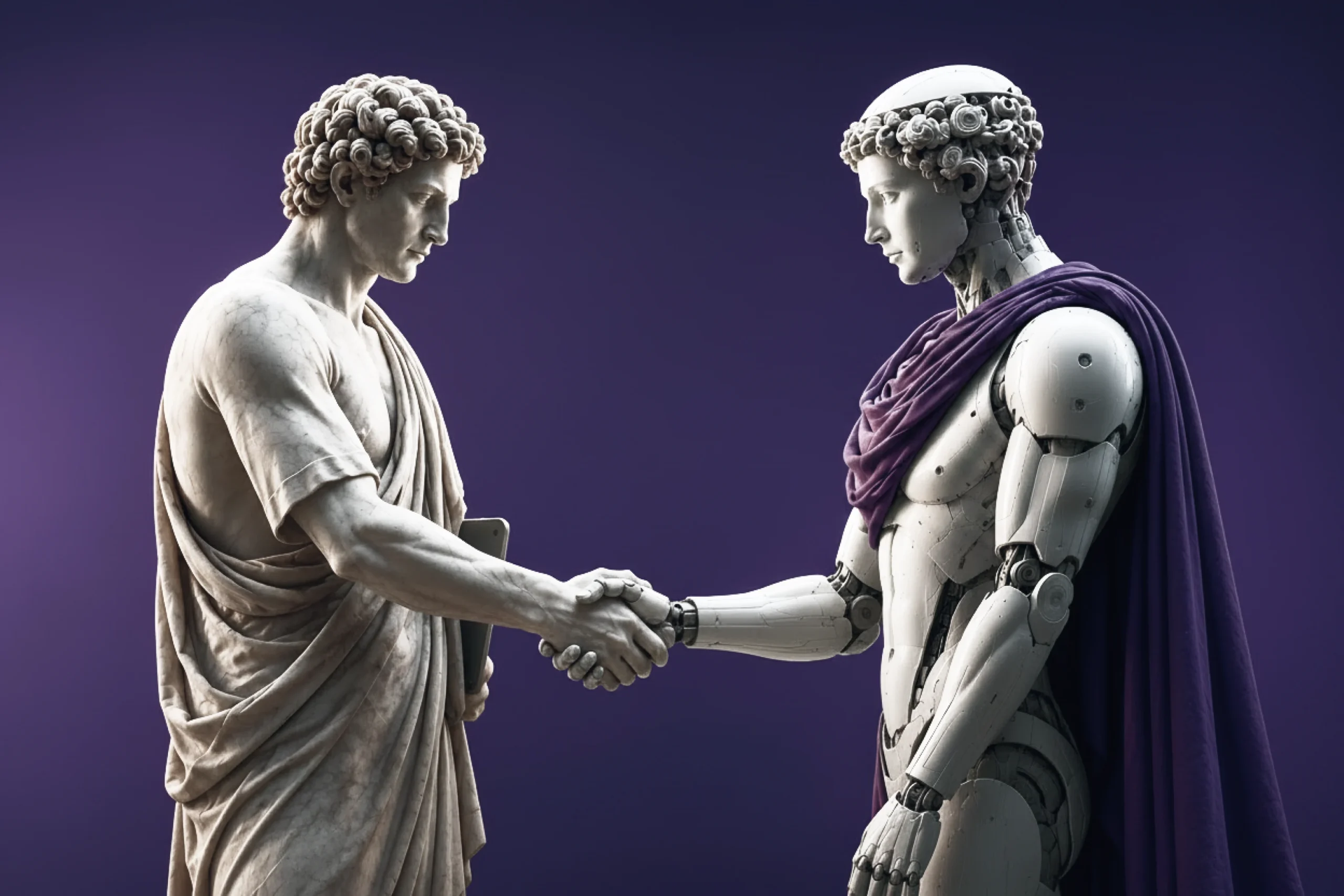
The discussion showed how an AI creative workflow works in practice: AI expands production capacity, while people protect the product, brand, and final output.
Scale creative production with AI
Turn approved ideas into more on-brand ecommerce assets.
How AI Is Compressing Ecommerce Production
The Bear House offered one of the clearest examples of why ecommerce teams are rethinking traditional production.
Harsh described a process that historically involved models, usage rights, cameras, lighting, crews, editing, and multiple production stages. A campaign around one product could require significant investment and still need to be refreshed quickly.
AI changes what happens once the story and creative direction are clear.
During the panel, The Bear House described how work that previously required much longer production cycles could now move significantly faster with AI supporting execution.
That is where AI creative production creates immediate value.
The brand still decides what the campaign should communicate. But every new scene, animation, background, or format no longer needs the same production effort as the original asset.
The real shift in AI creative production is not simply faster content creation. It is that one strong campaign concept can now support much more creative output.
One Campaign Can Become Many More Assets
Traditional campaign production often forced brands to prioritise a limited number of hero assets because every additional execution meant more shooting, editing, design, or agency work.
A Generative AI workflow changes that equation.
Once the creative direction is established, the same concept can be extended into:
- New scenes
- Motion assets
- Different crops
- Channel-specific formats
- Background variations
- Campaign extensions
This is where AI creative automation becomes useful. AI takes on repeatable production work around an idea that already has direction.
As we explored in Generative AI in Fashion: How Brands Turn One Product Into a Complete Campaign, the opportunity is not to generate disconnected assets. It is to carry one product and one campaign concept across the different creative jobs a launch requires.
Blog 1 was about deciding what deserves to be created. This blog is about turning that decision into a repeatable production model.
Phool Keeps the Base Creative Under Human Control
Phool showed that faster production does not mean handing the entire creative process to AI.
The brand had already built a strong visual identity before generative AI became widely available. When the team experimented with AI-led creative, the outputs did not always capture the quality or aesthetic language customers expected.
Instead of rejecting AI, Phool changed where it entered the process.
The design team keeps control of the base layer. AI is then used to animate it, extend it, add layers, or produce variations.
This is a practical example of Human-AI collaboration inside an AI creative workflow.
The human-created base becomes the source of truth. AI increases the number of ways that approved creative can be used.
For brands with an established design language, this can be more effective than asking AI to invent each campaign from a blank prompt.
Perfora Is Increasing AI-First Production Without Going AI-Only
Perfora showed a different version of the same shift.
During Edition 01, the brand explained that purely AI-created creative had grown to roughly 30% of its content mix for the quarter being discussed.
But the direction was still blended.
Perfora was increasing AI-first production while continuing to use human-created content rather than replacing it completely.
Phool keeps more of its foundational creative with designers. Perfora is comfortable moving further into AI-first execution.
Both approaches keep people involved.
This is why AI and human collaboration cannot be reduced to one ideal percentage. The right AI creative workflow depends on the brand, category, asset type, and the level of visual accuracy customers expect.
Human Review Protects Product Accuracy and Trust
One of the clearest concerns in the panel was that AI can produce convincing creative while still changing the product.
A generated asset may alter packaging, colour, labels, materials, proportions, logos, or other small details. In ecommerce, those changes matter because customers make purchase decisions based on what they see.
That makes human in the loop AI essential before publication.
The panel repeatedly emphasised the need to check whether the product shown in the creative still matches the real SKU.
Our guide to Why Your AI Product Photos Keep Getting It Wrong and How to Fix It explores this further through product grounding, references, and quality review.
The same review principle applies to synthetic people.
The panel discussed AI-generated UGC as an example of where production can move from clearly creative to potentially deceptive. Obviously synthetic AI-generated content is easier for audiences to understand. But a fake customer or AI-generated influencer presented as real can manufacture authenticity rather than simply support production.
That means human in the loop AI should protect two things at once:
- Is the product represented accurately?
- Is the format honest about what the audience is seeing?
This keeps human review focused on the two issues that matter most: product truth and customer trust.
Different Categories Need Different Levels of AI Production
Edition 01 also showed why brands should not adopt AI at the same level simply because the technology is available.
Phool gave a clear example from gifting. Customers purchasing a gift box may want confidence that the item they see is the item the recipient will receive. A heavily synthetic visual can create uncertainty rather than reassurance.
Luxury creates a similar challenge because craftsmanship, material quality, and authenticity are part of the value being sold.
Other categories have more freedom.
Fashion can use AI for environments, styling, editorial treatments, and motion as long as the product remains accurate. Entertainment-led creative can push further into obviously synthetic visuals because realism is not the promise being made.
A Generative AI workflow therefore needs to reflect customer expectations.
The useful question is not, “How much production can we automate?”
It is, “Where can AI create speed without weakening what customers need to believe about the product?”
What Edition 01 Reveals About the Production Model
The panel examples point toward a straightforward operating model:
Approved direction → Reliable base creative or product reference → AI extensions and variations → Product and brand review → Human approval → Channel-ready assets
The Bear House shows why production cycles are becoming shorter.
Phool shows why an established brand may keep foundational creative under designer control.
Perfora shows that AI-first production can increase without becoming AI-only.
The discussions around product accuracy and synthetic UGC show why review remains necessary.
Together, these examples make the AI creative workflow much more practical than a generic “human versus AI” debate.
The objective is not to automate every production decision. It is to use AI where it reduces repetitive execution while keeping people involved wherever product accuracy, identity, or trust is at stake.
That is also why AI and human collaboration is more useful than choosing between a fully manual or fully automated production model.
Where Monica Fits Into This Production Model
The AI creative workflow described throughout the panel is the same production problem Monica, ShopOS’s AI Creative Director, is designed to address.
Once a team has a product and creative direction it is ready to scale, Monica helps extend that foundation into multiple campaign assets without forcing the team to restart the creative process for every format. Brand Memory, Spaces, and Refine support that process by carrying brand rules into production, structuring repeatable creative jobs, and improving outputs without starting again from scratch.
That mirrors the model discussed by the panel: AI increases production capacity, while humans keep control of direction, product accuracy, and final approval.
Conclusion
The Edition 01 panel showed that ecommerce brands are not moving toward one universal AI production model.
The Bear House is using AI to compress a traditionally expensive and time-heavy production process.
Phool keeps foundational creative under design-team control and uses AI to extend it.
Perfora is increasing AI-first output while continuing to blend it with human-created work.
Different approaches show that AI and human collaboration can take different forms, but the underlying shift is the same.
A strong campaign concept can now produce more assets without requiring a completely new production cycle each time. At the same time, product accuracy, brand fit, customer trust, and final approval remain human responsibilities.
That is the real value of an AI creative workflow.
It is not about removing humans from production. It is about using AI where it creates leverage and keeping human judgment where customers still depend on it.
Build a Creative Production System That Scales
Turn approved campaign ideas into more on-brand, product-accurate creative without rebuilding the production process every time.
See how ShopOS helps ecommerce teams connect creative direction, AI-powered production, brand consistency, and human review in one workflow.
Book a demo to see ShopOS in action
Frequently Asked Questions
What is an AI creative workflow?
An AI creative workflow is a production model where a campaign concept moves through AI-assisted generation, variations, adaptation, product review, and final human approval.
How are ecommerce brands using AI after a campaign concept is approved?
Edition 01 showed brands using AI to shorten traditional production cycles, extend base creative, generate more variations, and adapt assets while keeping people involved in review.
Why does human review still matter in AI creative production?
Human review protects product accuracy, brand consistency, authenticity, and customer trust. AI can produce visually convincing assets while still changing important product details.
Do all ecommerce brands need the same Generative AI workflow?
No. Phool and Perfora demonstrate different levels of AI adoption. The right production model depends on the category, product, customer expectation, and how much accuracy or authenticity influences the purchase.
What does Human-AI collaboration mean in creative production?
Human-AI collaboration means people keep control of creative direction, product truth, brand standards, and final approval while AI supports extensions, variations, adaptation, and other repeatable production work.